

(Rock) Stars, Programming and Aliens
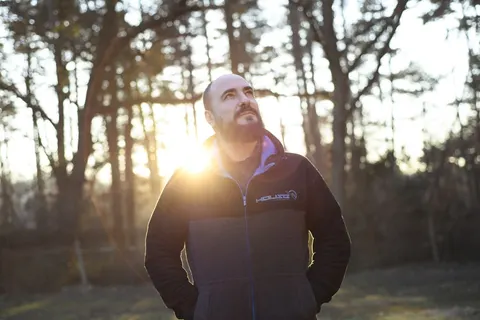
He is a programmer, an astrophysicist with scientific publications and… the drummer of a rock band. A Renaissance man, only from the digital age. We have so many topics to discuss with Chief Assistant Professor Orlin Stanchev, a programmer at Kin + Carta, a lecturer at Sofia University St. Kliment Ohridski, an explorer of distant galaxies and the drummer of the band ALI. Let's not waste any time! How are new stars born in the sky, in science, in music? We will head out into deep space to learn how artificial intelligence can help us get to know the universe. We will talk about how new technologies are fundamentally changing the paradigm of science. We will look for what music, science and programming have in common. Last but not least, we will reflect on aliens and on artificial general intelligence. Which one is coming first? Which one should we worry about more? Lift-off! 10, 9, 8, 7….
 42
“AI Today Is Redrawing the Boundaries of the Impossible”
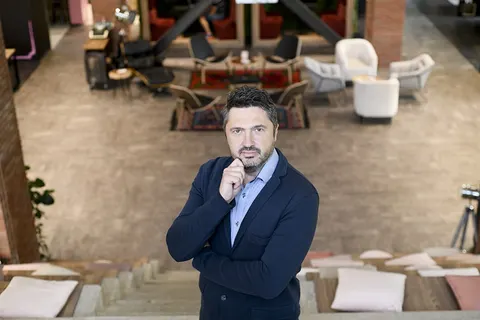
LivePerson… A live person? No, this one isn't alive—and that's exactly what makes it interesting. It's the name of an American company with a fascinating software project that relies on a serious team in Bulgaria. Alexander Raychev is the executive director of LivePerson and has years of experience as a manager in IT. From that vantage point, it's interesting to hear where he thinks we stand today with the much-talked-about artificial intelligence. How long will the algorithm remain distinguishable from a “live person”? Beyond all the hype, what are the optimistic and pessimistic scenarios for the development of this kind of technology?
 43
Isus: The Programmer Who Came Out of the Ghetto
“The hardest part was taking the essence of the two worlds I live in and combining them into one. It takes a lot of emotional energy and a great deal of empathy. I’ve been rejected by Bulgarians because I’m a Gypsy, and by Gypsies because I’m ‘pretending’ to be Bulgarian. You fight to be respected on opposite fronts.” It is my pleasure to introduce Isus Kostov! To his colleagues he is simply “Jesus,” and to me he is a powerful example of how a person can defeat his surroundings, prejudice, even himself, to reach what he dreams of, however distant, even impossible, it may seem. His road begins in a Roma ghetto, and today he is a software engineer at a respected company. He taught himself online and never gave up, starting from a school he often attended hungry, in shoes with no soles. By now he has built up serious experience in the profession. “The most valuable thing programming has given me is, without a doubt, freedom,” Isus says. “It gave me the chance to get out of the difficult situation I was in and to build a life in which I’m independent and can help my family.” His next goal is to inspire more kids to chase their dreams, and not to give up when they are held down by their surroundings and their circumstances. And what might happen if stories like this changed the attitude of both our society and the IT sector toward these children?
 44
Gatakka, ChatGPT the Psychologist and the Price of Critical Thinking
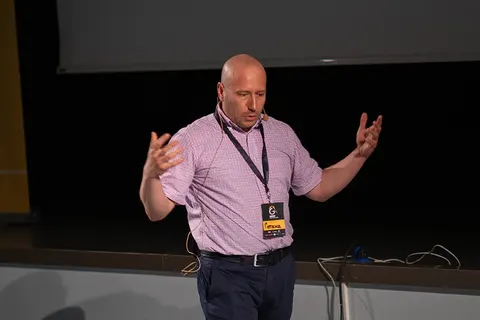
Ivan Vankov (Gatakka), a four-time IBM Champion, longtime tech blogger and author of free tutorials that helped many into software, has worked in machine learning, programming, team leadership, DevOps and blockchain architecture, and is now a freelance consultant to promising ventures. With his vast knowledge and wide view of the trends, he practically sketches the future. What big news is coming after the AI boom, how will machine learning change our attitude to work, and how did ChatGPT turn out to be a remarkably successful psychologist?
 45
The Teacher Who Was Never a Pupil
Can a child get a more meaningful education without ever crossing a school's threshold? Bozhidar Marinov is a remarkable young man: only 22, he already has 15 years of programming experience, leads the curious Comrade Cooperative and works on promising blockchain projects. He has never been to school because he was homeschooled, he won a string of programming contests before being barred for being outside the traditional system, and now he teaches the next generation of kids and has written a historical novel about the past of the Rhodope Mountains.
 46
“Online, a Little Paranoia Is Healthy”
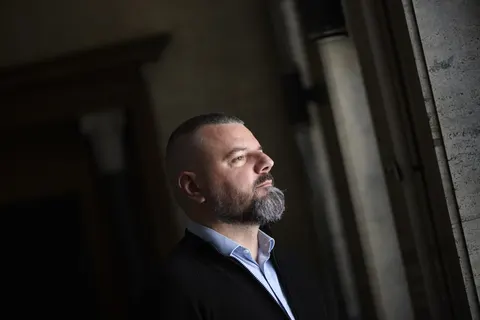
Can artificial intelligence put an end to the eternal game of cops and robbers? Is complete security online even possible, and is it true that our part of the world breeds remarkably good hackers? Petar Kirkov, the Bulgarian sheriff in today’s online Western, has spent more than 20 years in cybersecurity and is now the national coordinator in the field.
 47
Dr. Raychev, the Man Who Gave Google Koprivshtitsa
Dr. Veselin Raychev is the only Bulgarian whose doctoral thesis ranked among the world's top three of the year across all of computer science, and with it he launched a field now booming: AI that writes code. A former Google engineer whose algorithms still route us through Google Maps and the founder of DeepCode, he talks about the AI hype, the decisions that matter and why he still cares so much about Bulgaria.
 48
LatticeFlow: Making Artificial Intelligence Reliable and Safe
LatticeFlow is impressive not only because it solves fundamental problems in artificial intelligence systems, but because it makes them more secure and safe, issues that grow more urgent with every big headline on the subject. It is also the first high-tech company to position itself next to the INSAIT institute and work closely with it. Even without an official funding round, the startup raised $12 million, part of which will go toward hiring specialists in Sofia. We meet AI expert Dr. Petar Tsankov to talk about building a startup in a field that is only just taking shape, how the team's algorithms help create a new generation of reliable AI across many applications, and the vast prospects opening up for the team that is already working in Sofia.
 49
On the Tenth Day, Brendan Created JavaScript…
You know, one mythical figure created the world in a week. Brendan Eich took a little longer—10 days—to create another new world we all live in… JavaScript. Here is the cautionary tale of how a man who landed almost by accident at the epicenter of events built something enormous, and how, in fast-moving technological times, fate can turn a hero into an outsider in the blink of an eye. console.log(“Here we go!”);
 50
“Artificial Intelligence Will Simply Make Our Work More Pleasant”
Will ChatGPT's successors write the news for each of us, exactly the way we'd like it? Hristo Tomov, head of AI at the software company Dreamix and one of its founders, talks about personalized news, filter bubbles, fake news and the limits of large language models. How far has artificial intelligence come, and what does the future look like if it keeps developing at the same pace?
 51
“ChatGPT Is Just a Very Expensive Parrot”
“We don't know what nonsense ChatGPT will come out with next, because it is just a vast extrapolation of billions of sources, of terabytes of text. However much this machine seems to talk, it is really just a very expensive parrot. It burns through $3 million a day in electricity and has no idea what it is saying.” Mariyan Gotsev has more than 30 years of experience in information technology—as a programmer, but above all as a system-level architect and analyst. His other great passion is philosophy—he immerses himself in the search for meaning. Add to all this the fact that he is a poet. I was struck by his manifesto for a venture he calls “meaning robotics,” or “semantic robotics,” in which he argues that the much-hyped language models ChatGPT and GPT-4 cannot cope with many of their tasks because they do not look for meaning. Instead, they try to offer the most accurate answers possible through the well-known method of brute force. They look for patterns, yet remain far removed from human understanding, and so, in his view, they have reached their limit. Mariyan Gotsev, on the other hand, is convinced that a new approach could give us a technology that comes close to the human way of thinking. That is our occasion to talk about the much-hyped technologies as overpriced parrots. Can we really give computers common sense, and why does our guest believe the only way is to give them meaning? Can a machine think from a human point of view? Why must our relationship with future semantic robots necessarily be that of slave owners? And why did this computer specialist acquire domain names that he is selling for millions?
 52
“Nothing Will Replace the Human Programmer. Not for Another 10 Years, at Least”
Will artificial intelligence soon put programmers out of work? Is the end coming for the huge demand for specialists, the hunger for talent, the good conditions in this industry? Is an algorithm on the horizon that will outstrip human intelligence? How is technology leading to the end of liberal democracy? We hear the view of someone from the heart of the software world. Mihail Panayotov has a long and colorful track record: he has been programming since he was 14 and started his first business at 15. He has more than 18 years of experience in a range of roles, from programmer and software architect to chief technology officer and entrepreneur. Add to that his interest in politics and his intriguing view on why it is time for more and more people from the software world to enter it.
 53
Kademlia: The Bulgarian Algorithm Behind the Decentralized World
Kademlia is the name of one of the most significant technological solutions in information technology ever created by a Bulgarian. Never heard of it? Then it's high time! Petar Maymunkov created, almost as a joke, the system that is now widely used across the world of decentralized solutions, from BitTorrent to Ethereum. Kademlia turned out to be exactly the right answer at the turn of the millennium, when the internet took its decisive step away from centralized systems and toward the path that led us to blockchain. The scientist and his creation deserve their fame, and here is why.
 54
“Machines Remain Naturally Unintelligent”
How did underestimating the ethical side of artificial intelligence lead to enormous problems that have shaken the foundations of our civilization? What AI regulations is the EU preparing, and could they slow the boom in the field? How did the web move through its successive stages, and what should we expect from Web 3.0? Vladimir Petkov (Kaladan) has worked in IT for a quarter of a century, watching the past and present of information technology up close while waiting for the future. His experience lies in data and innovation, and for six years he and his friend Elenko Elenkov have been making the cult podcast Govori Internet (The Internet Speaks), now a whole platform of podcasts as varied in subject as they are consistent in quality.
 55
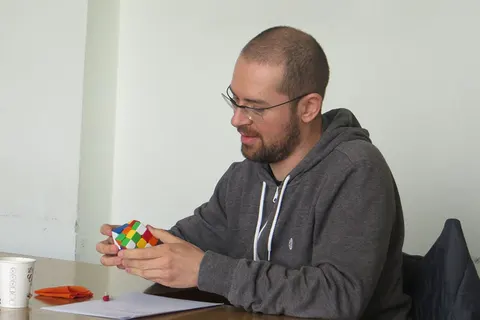
“Our Only Chance Is to Remember That We Are Creators”
Todor Kolev is a seasoned programmer, entrepreneur and mentor to remarkable young talents in information technology, but also a man with his own, deeply curious view not only of technology but of how we are evolving as a civilization. Are we ready for the next step in evolution that technology is bringing, and what comes after the end of capitalism?
 56
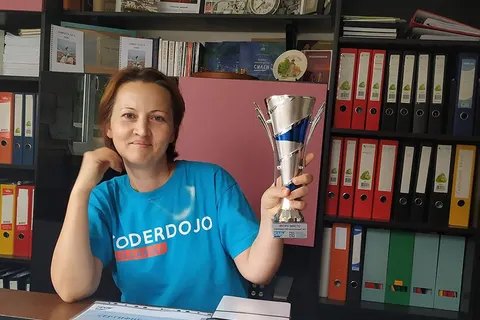
“The Saddest Thing Is When a Talented Child Gives Up”
Children and computers: how do we make that meeting go as well as it possibly can? Elitsa Tsoneva worked as a journalist before moving into information technology, spent 15 years in the field, and then, quite unexpectedly and without any plan, became a teacher. Why does education never become a priority in Bulgaria, how does a teacher win students’ attention, and how do we spark the curiosity that makes a child truly learn and grow?
 57
So You Want to Be a Programmer?
Is programming for you, and is it worth trying, how late is too late, which language should you pick, and how do you land that first job? I decided to become a programmer at 33, after years in another profession, and here I have gathered everything I wish someone had told me back then.
 58
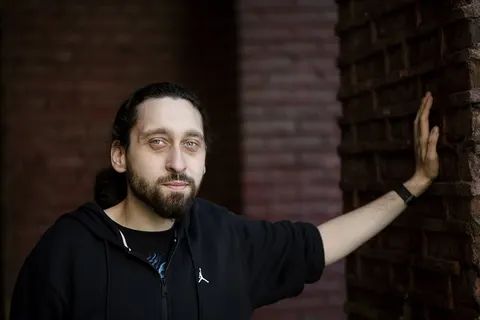
“In the World of AI, Everyone Can Find Something Exciting”
Yordan Darakchiev leads the only program in Bulgaria where, in just a year, you can gain enough knowledge to start working in artificial intelligence. How did Yordan, an astrophysicist by profession, come to create a venture that has now given so many people the fundamentals five times over, and how do its graduates go on to research institutes, to companies like Tesla and Meta, to promising startups, and even to ventures of their own? What does it take to succeed in machine learning, how does this kind of technology help us understand the world we live in, and which directions in artificial intelligence are the most exciting ones to watch?
 59
“Building Software Is a Team Sport. The Team Is Stronger Than the Individual”
How long will programmers stay this much in demand in Bulgaria, and what does the future hold for this attractive sector? Veli Pehlivanov, a cofounder of Resolute Software, talks about what sets Bulgarian IT specialists apart and whether a career in programming is still worth pursuing. With colleagues and kindred spirits he built a software consultancy that wants to offer a model of its own and already works with clients on four continents.
 60
“Selfishness Is the Entrepreneur’s Enemy”
1,000,000,000: that is how many visits a month the websites looked after by today’s guest and his team receive. Mario Peshev is an impressive figure for his story, for his successes and, above all, for his outlook on the world. WordPress made it possible for anyone today to have a dignified place of their own on the web, and Mario wrote “pieces” of the code used by every one of the hundreds of millions of sites built on the platform; his company DevriX is among the 20 most sought-after WordPress agencies in the world. What is it like to own your own “little piece of code” in WordPress, what changes when an enthusiast suddenly finds himself at the head of 50 people, what does the future of the digital world look like to Mario, and… will his beard still be his trademark a decade from now?