

(In)Human Resources: A Referee Calls the Match Between AI and People
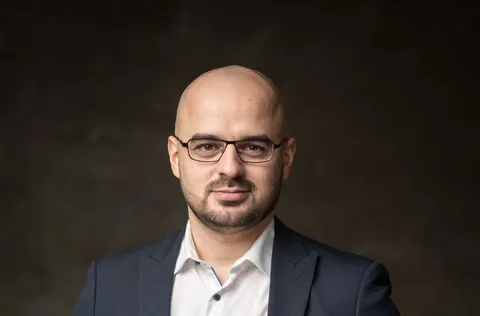
Can an algorithm land a job? A fake candidate dreamed up by ChatGPT made it to two job interviews, so I asked Petar Dzhuganski, a former assistant referee with more than 250 professional football matches behind him and now head of recruitment at a large software company, to analyze the match between AI and humans. Is the software industry still letting newcomers in, are professions disappearing because of AI, and should workers from distant countries frighten us?
 22
Agile: Simple, Clear—and So Beautiful
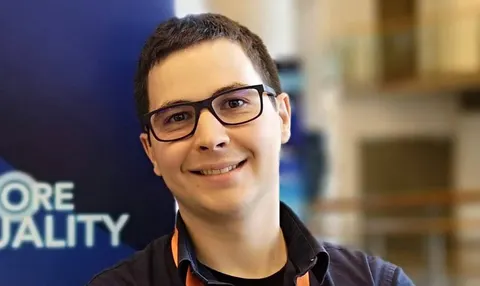
Agile. Let's run a quick check. If you don't work in information technology, you have most likely never heard the term. And the reverse: if you do, you say it so often that it has lost all meaning. Did I guess right? Time to step into an unusual, underrated and exciting world where human creativity, talking problems through and searching for solutions turn from magic into everyday routine and a recipe for success. In 2001, a group of IT specialists wrote the Agile Manifesto, which gradually became a guiding direction for the way we build software. Today it promises to help any venture move forward, solve complex problems and thrive. Nikola Bogdanov went through a colorful range of roles in the IT world (he will tell us all about them in a moment) before finding his true calling: explaining Agile, making the concept practical, showing companies why and how to adopt this way of thinking. And above all, building high-performing teams. Today's guest is the organizer of the first large-scale event of its kind in Bulgaria, where international and Bulgarian speakers from a range of industries will talk about adaptive management and about Agile beyond the clichés. On September 26, at the University of National and World Economy (UNWE), there will also be a Digital Stories booth, where I'll be happy to chat in person.
 23
Did ChatGPT Land a Job as a Programmer?
Can ChatGPT manage to… land a job? Or at least make it to an interview, perhaps the hardest step when it comes to your first job? Instead of idle speculation, I'll test it in practice: the algorithm will write the résumé of a young programmer, and I'll send it to 10 entry-level job ads. Will recruiters invite him to an interview, grow suspicious, or simply ignore him?
 24
TrumpScript, or Coding in Song: 10 Wacky Programming Languages
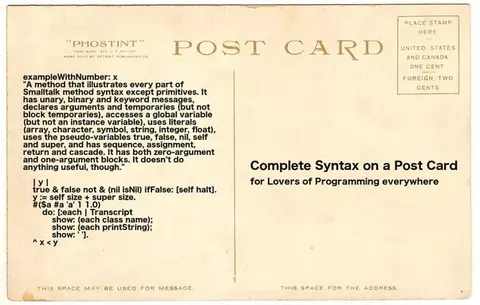
Computer code that reads like a cooking recipe? Programs built out of colors or sounds? Here are 10 of the strangest programming languages, inspired by Shakespeare, Terry Pratchett and even Donald Trump.
 25
Does Life Have an Algorithm?
Can algorithms be useful in everyday life, and is there a way to bring the world of technology together with the human, emotional one? Petar Sabev, a software testing specialist with vast experience and a broad, unconventional outlook, will open this year's DEV.BG All in One with a talk on the algorithm of life in 10 and 1/2 personal stories. Two IT people sit down to talk about programs and people, and the conversation ends in… poetry.
 26
“AI Can Already Help with Absolutely Any Human Task”
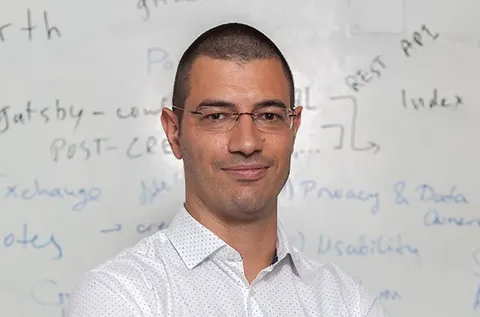
Nikolay Markov is among the specialists paving the way for artificial intelligence to enter every area of our lives. He has spent more than two decades in information technology, yet he trained in engineering physics and macroeconomics. His experience runs from building cloud solutions through cybersecurity to researching and deploying AI. Today he leads the AI, DevOps and cloud practice at SoftServe, and at TeamLandi he is building a system that will give small and medium-sized businesses access to the full range of what AI can do. Why are these technologies here to stay and change our lives? How is AI the first technology that can reach into absolutely every field? What will the future look like?
 27
Trust, but Verify Online!
If you have never heard of “social engineering,” or “social engineerism,” as today’s guest says we ought to call it, you are probably picturing a plot straight out of Frankenstein: the engineer builds himself a person… Or something from the conspiracy theories about mass mind control. Whether you have heard of it or not, though, we need to talk about it more and more. Because this is the most dangerous and most effective attack in the digital world. One that targets not computers, networks, servers or programs, but the weakest link in the chain: the human being. “Today cybersecurity breaches happen more and more often through social engineering, a method that uses manipulation and manipulative techniques so that people are deceived and access to sensitive information is gained,” says cybersecurity specialist Plamen Tsvetanov. But what are the most important steps to protect ourselves? What are the biggest risks of underestimating the person on the other side? Why should trust online be a scarce commodity? The subject matters to everyone, even those who don’t realize it…
 28
“AI Is Arriving on a Massive Scale, Turbulently and a Little Chaotically”
Bulgaria will soon host the first International Olympiad in Artificial Intelligence, bringing talented young people from at least 30 countries to Burgas. Elena Marinova, co-founder and longtime president of Musala Soft and co-founder of the olympiad, explains how the idea was born here. She also discusses what AI promises to change and why we urgently need a public conversation about it.
 29
“Truly Intelligent AI? Only If We Take the Next Big Step”
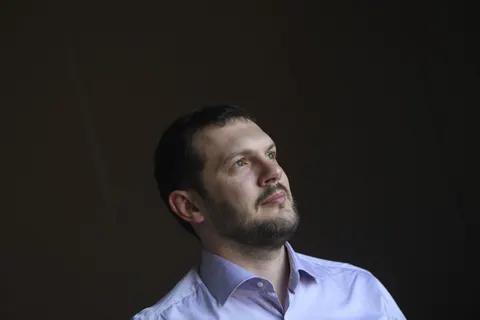
Viktor Botev and his team are building a successful product in one of the most high-tech fields of artificial intelligence, yet his enthusiasm for the near future in which AI will change us all is far from the sweeping expectations of the day. For eight years he has been chief technology officer of Iris.ai, a Norwegian-Bulgarian startup that applies AI to vast bodies of scientific data. A long, human conversation about technology for connoisseurs: hallucinations, the limits of large language models, and why the era of Bulgaria's outsourcing companies is over.
 30
Stack Overflow: The Programmers' Savior Is Fading
It is easy to tell someone who has ever programmed from everyone else: if you have “touched” code, you have seen Stack Overflow. In just 15 years, the question-and-answer site fundamentally changed the way programmers work, but today the legend is heading toward its sunset, ironically because of the technological progress it helped make possible.
 31
“Anyone Can Be a Programmer. It’s Time More of Us Were Engineers!”
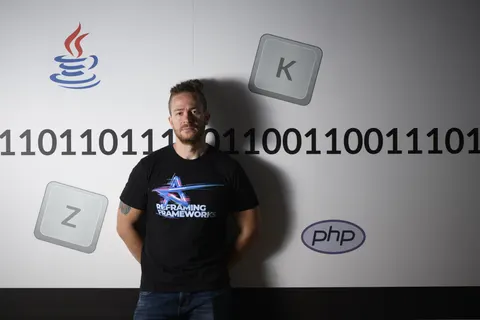
Ivaylo Kenov is an inspiring teacher who has helped countless people become programmers, a shy man who stumbled into the profession after realizing civil engineering wasn’t for him. After years at the head of SoftUni’s development team, he now leads a company with an ambitious goal: to remind the industry that building software should be an engineering process, not just coding. We talk about whether anyone really can become a programmer, why finding a first job feels so hard, and how the engineering approach got him from a doctor’s warning that he might never walk to 150-kilogram deadlifts.
 32
“We Bulgarians Have the Mindset to Be Successful Entrepreneurs”
Boris Paskalev is an entrepreneur with impressive experience in the startup world. He recently became a strategic advisor to INSAIT, Sofia's Institute for Computer Science, Artificial Intelligence and Technology, one more guarantee that we can expect ever more remarkable news from there. A former youth national basketball player, he went on to study at MIT, then helped found DeepCode, a pioneering AI coding startup acquired by Snyk in 2020. We talk about his path through Silicon Valley, the AI revolution, the coming revolution in robotics, and how Bulgaria can have more successful startups.
 33
“The Point Is Not to Kill Our Own Creativity”
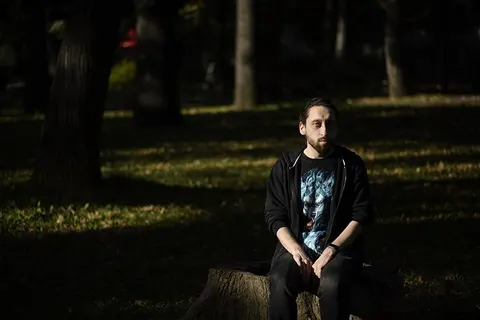
Is it still worth learning programming or data science, or is the future of software engineers doomed? Yordan Darakchiev, who is teaching Bulgaria's first one-year data science and AI module for the eighth time, talks about the challenges generative algorithms pose. His greatest hope is that we won't lose our curiosity and creativity, and he thinks mindless entertainment threatens them more than any AI ever could.
 34
The Programmer Who Chose to Become a Babysitter
Programming, and a future in the much-vaunted IT sector, is as tempting as ever. Our guest today spent 20 years as a programmer, long before it became fashionable, until he realized he was tired of computers and happiest among children. So, defying every stereotype, Bogdan decided to earn his living as a babysitter.
 35
“We Live in a Time of Total Transformation”
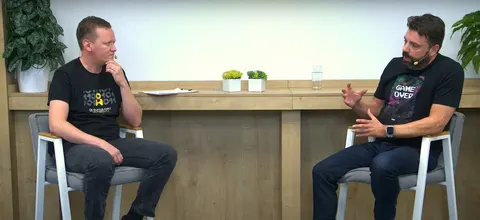
“We are surrounded by a huge number of software systems, we use them in our daily lives, and they were written by mediocre programmers. The way we create software is broken!” “The value of meaningful content will rise, because there is far too much garbage, far too much noise. The only way to preserve ourselves as human beings is to put up barriers. To sift what gets into our heads.” Boris Simandov has vast experience in technology. For nearly 10 years he held a director's position at Chaos Group, one of the most successful Bulgarian IT companies. Today he helps develop the next generation of startups. Together with Rosen Genchev, he created the Facebook group DevBG, the liveliest (and often rather strange) online space where people from the tech world meet. We talk about: – whether we can feel at ease in today's turbulent times – the artificial intelligence revolution we are living through, and the skeptics – the next important step: Sora and video generation – the big challenges and the professions doomed to disappear – the return of truth as a value, and the media of the future – the DevBG group as the best example of why and how democracy doesn't work today.
 36
The Unseen Code
“In the software world, people with visual impairments can find exceptionally good professional opportunities,” says today’s guest—and he proves it with his own example. For two decades Ismail Ismail has been building websites with open-source platforms and championing accessibility in the Bulgarian WordPress community, and now he has set out on the path of classical programming. Open your senses to a rather unexpected… point of view.
 37
“We Have No Idea What We Are About to Create!”
“We need to dial down the arrogance. We technocrats, the tech community, have to step into the role of responsible leaders of what is happening, not people profiting from their amber towers. Otherwise this will not end well.” Dobroslav Dimitrov is a co-founder of Imperia Online and chairman of BASSCOM, the Bulgarian Association of Software Companies. When progress in artificial intelligence caught everyone's eye, he stood out for his positions: that nothing would be the same after the arrival of ChatGPT and its kin; that no area of our lives would be left unshaken to its foundations; that this is also our chance, as a country and as a tech sector, to make enormous progress. A year later his view remains the same, now backed by experience. We talk about the coming social changes and the role of the tech sector, in Bulgaria and abroad, and about the demand for programmers. About the gradual and irreversible advance of artificial intelligence. About the technological divides that confront us with an existential risk, and the other big questions of the day.
 38
Is Dr. Artificial Intelligence About to See You?
Which fields of medicine will artificial intelligence enter soon, and which AI-based technologies are already part of everyday practice? Programmer, lecturer and PhD student Stefani Paunova has spent months immersed in the latest research on the subject. With her, we take a peek into the fascinating near future where medicine meets the possibilities of AI.
 39
“I Want to Read Something Written by People!”
Alexander Kondov joins us to talk about books and front-end programming, and about writing, in words and in computer code, with detours through philosophy and artificial intelligence. “Programming is an art, not engineering!” goes our guest's creed. Why does he think so? The three of us, him, me and ChatGPT, are sitting in a digital tavern over a cup of digital tea, chatting about those big questions that stir us all…
 40
The Programmer Who Deleted 11 Lines and “Broke” the Internet
March 23, 2016, could have been an apocalyptic day in the history of the digital world, one unlikely ever to be repeated. Netflix, Facebook and Spotify were just a few of the countless sites that suddenly turned out to be… impossible to maintain and update. Why? Twenty-eight-year-old programmer Azer Koçulu had simply deleted 11 fateful lines of computer code. But how can an unknown programmer block the sites of global giants? Why, in today's strange online world, do enormous multibillion-dollar projects unexpectedly turn out to rest on the shoulders of volunteer enthusiasts? And what made Azer so angry that he unleashed the butterfly effect in its most terrifying form? Sometimes the smallest, seemingly harmless lines of code change the whole program…