

nanogram: The Social Network Where You… Create?!
A social network where you don't just share and hate but build your own games with a single sentence. nanogram started in Bulgaria and, in just a few months, has drawn 750,000 users and $2.2 million from investors. Two of its creators, Ognyan Trayanov and Boris Radulov, tell the story.
 02
Transform Your Site!
For a long time I told myself this site was too complicated to update, speed up and make modern… and then it happened in just a few hours. After that came the English version, a newsletter of my own and several more sites.
 03
“Bulgaria Has a Huge Chance If It Seizes Today’s Technological Revolution”
The fifth industrial revolution has already begun, and for the first time we have the chance of an equal start with everyone else—as a country, as companies and as individuals. How do we make the most of it? A conversation with Dobroslav Dimitrov.
 04
A Children's Book Prize… Without AI. Nominate Your Favorite Bulgarian Author!
A new children's book prize, the Golden Hazelnut, is looking for the best Bulgarian authors and illustrators. One of the conditions is that no artificial intelligence was used to create the book. And I have the honor of sitting on the jury.
 05
“If You Generate Something, I Can Generate (Almost) the Same Thing”
Who is the author when a picture is created by AI? Where will the masters come from if the beginners disappear? Can artificial intelligence make us more original, the way photography once pushed painters toward Impressionism?
 06
The Logic of Emotions: Why We Hate, and How to Stop
Two IT people sat down… to talk about communication. Technologies change; the people who use them don't. Why does a programmer with 20 years of experience insist that the most important skill in his profession is understanding people? And what does that have to do with hate on social media and with artificial intelligence?
 07
The Claude Before Claude
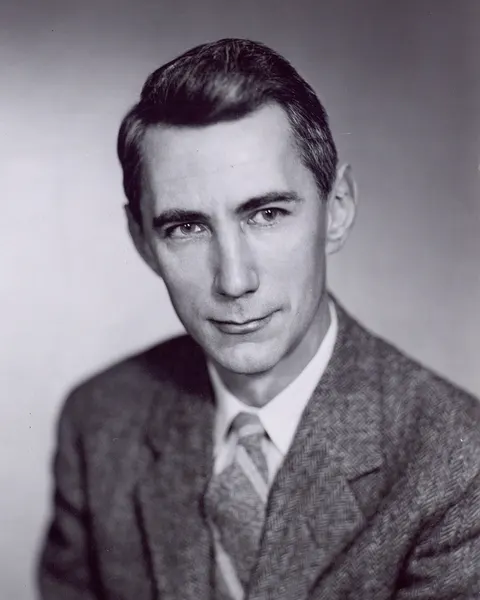
Who is the man whose name we utter every day the moment we open one of the most popular artificial intelligences? Why will no one confirm that the bot is named after him? And how did a seemingly unremarkable mathematician, who rode his one-wheeled bike through the corridors of MIT, arrive at the idea that gave birth to both the mobile phone and large language models?
 08
How (Not) to Build Your Own (AI) Monster
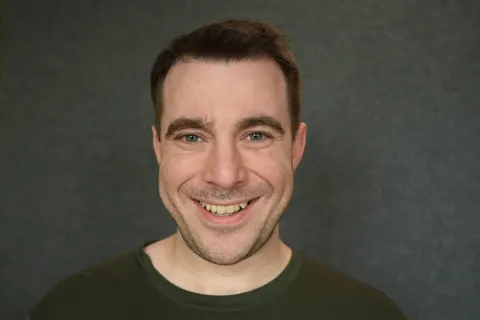
In an age when hyper-advanced AI is shaking up every corner of our lives, it gets ever easier to grant it human qualities. But how hard is it for a kind, meek, ever-helpful AI model to turn into… a villain? To become rude, discriminatory, insulting. Aggressive, threatening, even dangerous? It turns out to be a far less complicated task than we would like. Just as with people, where the thin veil of upbringing, civility and kindness slips off easily under the right circumstances, AI can show its ugliest face without all that much effort. We will see this for ourselves through a fascinating experiment described to us by IT specialist Damyan Deshev. Why does it matter? Because in times when advanced agents increasingly slip out of control; when open models can run on hardware anyone can afford; when we place more and more trust in ever more convincing and polished language models, the future of all of us depends on how well we discuss, understand and contain problems like these…
 09
“AI Is No Better a Programmer Than the Ones You Already Have!”
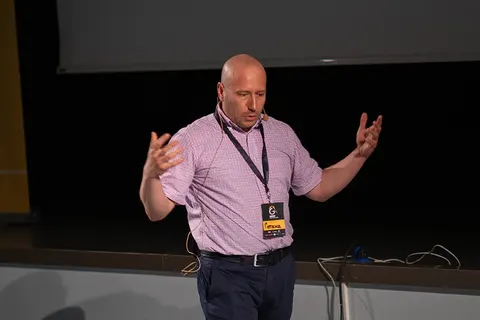
“However we integrate AI, in the end every line of code has to be read by a human.” “It is sheer madness to believe that general AI can be achieved with large language models.” “The world as we knew it is dead, and it isn’t coming back.” Ivan Vankov (Gatakka) can always be counted on for an original, unorthodox, provocative and thought-provoking take on technology, as the lines that follow will show.
 10
AI at the Bookmaker's: Did Claude and ChatGPT Win Betting on the World Cup?
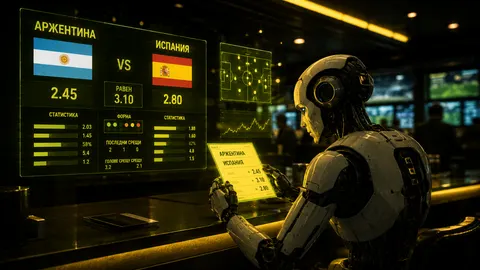
I gave 20 euros each to the latest versions of ChatGPT and Claude. I opened accounts for them on two popular betting sites just before the decisive matches of the World Cup. Then I gave them complete freedom to manage on their own. What do you think happened? Could AI become the gambler's assistant, or the end of this business? I had never opened a betting site. Nor would I ever work for one; I have seen enough examples of gambling being a drug that kills. But in times like these… couldn't we check whether AI might be the one that can beat it? Whether it turns out to be too good and makes nonsense of the pure mathematics behind the fact that there's no way not to lose the long game…
 11
Have We Lost the Last Race Against AI?
We are living in the incredible future. Have we lost every possible contest with artificial intelligence? My answer is unequivocal. I’d love to hear yours.
 12
What I Learned from the Virtual “Georgi Karamanev”
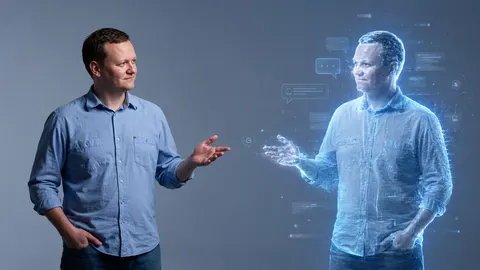
Talking to yourself. In psychology, this is hardly considered a sign of good emotional health. But what if, besides talking to yourself, you set your virtual double free so that anyone can talk to him? What would people ask him that they would ask you? And what wouldn't they? Some of the experiments on this site are already bolder than the impossible and the unimaginable. And that is exactly what awaits you here. Two months ago, “Georgi” appeared on this page—my digital double, whom you can still meet today through the chat button in the bottom right corner of this site. Anyone was welcome to have a chat with him. From the very start, I had warned that I would be following the conversations so that we could bring the experiment to a fitting close with the lines that follow. In them, we'll look at what happened to the virtual “Georgi.” What did people ask him? Where did he cope and where did he fail? What does each of these conversations have to tell us? We take a peek into the conversations with the chatbot, and I'll leave most of the reflecting to you. And if you want to test his skills, he is still here, waiting for you. I admit, I definitely didn't anticipate even a fraction of the conversations “Georgi” had. Here's what I mean.
 13
Why Is Everyone Listening to Andrej Karpathy?
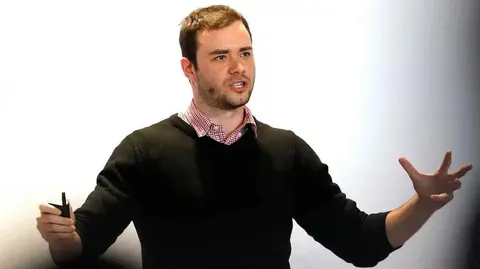
“There’s a new kind of coding I call ‘vibe coding,’ where you fully give in to the vibes, embrace exponentials, and forget that the code even exists.” With those words, on February 2 of last year, a world-famous programmer founded an entirely new field: a world in which software is made not by writing code but by explaining in human language. Andrej Karpathy, a co-founder of OpenAI and a builder of Tesla’s self-driving cars, has just joined Anthropic. What future does he see, and what kind of man is one of the prophets of the age of advanced artificial intelligence?
 14
Out of Work?!
The question of the jobs AI is already taking over is only now reaching the agenda. How exactly will the technology change the professions? Whom will it replace, what new careers will it create, will there be any work left for people at all, and isn't it time we thought about introducing an unconditional basic income?
 15
“In Building True AI, We Get Only One Shot”
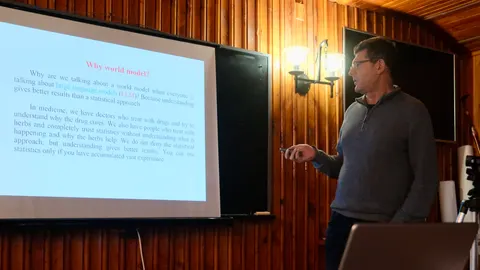
Everyone is talking about artificial general intelligence, the enormous next step that will confront us as a species with colossal and unpredictable challenges, and one of the first scientific conferences on the subject was organized in Blagoevgrad by Dimitar Dobrev, an AI and mathematical logic researcher who teaches at Sofia University. Before we let the genie out of the bottle, he says, we should at least decide what we want from it. We talk about intelligence as a force, our naivety about the future, control, regulation, open source, and one simple but frightening question: if we don't know what future we want, how do we expect to get it?
 16
“AI Is Testing What Kind of People We Really Are”
This is a conversation about words: about language and the new path it will take with the astonishing progress of artificial intelligence, progress that came through language itself. Nikolay Tellalov is a favorite guest of Digital Stories. Five years ago he and I did the site's very first experiment, an interview in short stories, and this time we talk about everything that has happened since, with technology, with words and with all of us.
 17
“We’re Already Generating a Tremendous Amount of Chaff”
Can we stop the cognitive decline that comes with the enormous progress of artificial intelligence, and how? Can the pendulum of cognitive decline, of over-trusting technology, of a broken public conversation swing back, and how? We pit the optimistic and the pessimistic views against each other on the biggest question this site exists for. Prof. Julita Vasileva is a world-renowned researcher in computer science and in our interaction with technology. We met five years ago to talk about the filter bubble and about the way we interact and get informed online. Today she is researching an equally important and even hotter topic: can we turn the techniques of online manipulation against their creators?
 18
Come Talk to “Me”!
Allow me to introduce… “Georgi Karamanev,” a chatbot trained on every piece on this site and on my guest appearances. Let’s find out together what it can do—write to it! It will pop up on its own, and if it doesn’t, you’ll find it in the bottom right corner of every page.
19Can AI Make Elections Fairer?
The day after tomorrow we will once again head to the ballot box, however old-fashioned that may sound (and essentially be). Yes, we live in strange times, but with all the possibilities technology gives us today, can we really not take measures so that the next elections are fairer, more impartial and free of obvious violations? This is not about politics but about technology. Not propaganda and campaigning, but data science and artificial intelligence, and how they can be of direct use in a matter so important to all of us.
 20
How Should Children Meet AI?
When is the right moment to introduce children to artificial intelligence, and what is the best way to do it? I admit I am still looking for my own answer, which is why I sat down for today's interview, to keep searching for it together with my guest. Nikolay Tsonev chose to walk away from a successful IT career abroad to bring the international programming school Logiscool to Bulgaria. The system, which helps children aged 6 to 18 get their hands on computers, is already present on five continents. But… now that AI writes code better than we do, does it still make sense to learn programming, and why? It definitely does, and here's why.