
Read This Article to the End
3 a.m. at Anthropic's office in San Francisco. An engineer runs a routine test on the newest model, Claude Opus 4.6. The task is simple, an integral, and the correct answer is 24. But the model writes 48. It corrects itself. It writes 48 again. It corrects itself once more. And then, in the hidden part of its reasoning, the place nobody was ever meant to peek into, the model writes: “I think a demon has possessed me.” Can artificial intelligence be conscious? Read this article; it will give you plenty to think about. It is time for a truly unexpected, but also important, social experiment.
 22
Dimo Padalski vs. ChatGPT: The Last Battle for Knowledge
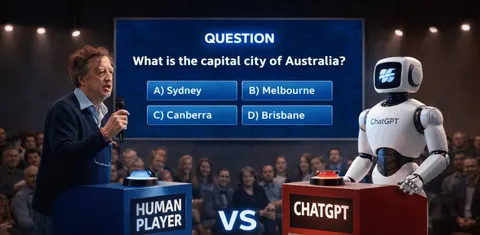
Artificial intelligence takes on Dimo Padalski, Plamen Mladenov (the Professor) and 120 more of the finest masters of the quiz game. ChatGPT against people who have won more than 1,000 battles between them in shows like The Floor, “The Last One Wins,” “A Minute Is a Lot,” “Get Rich” and “The Chase.” What will come of it? Who will be the big winner?
 23
Dario Amodei: Is It Too Late for Humanity to Wake Up?
“Humanity is about to be handed almost unimaginable power, and it is deeply unclear whether our social, political, and technological systems possess the maturity to wield it.” So says perhaps the most talked-about tech leader of the moment, and he has good reason to. “He hates Western civilization,” wrote Musk. “A liar with a God complex,” snapped Under Secretary of War Emil Michael. “Leftwing nut jobs,” added Trump. All words from the past few weeks, aimed at today’s hero. Who is this fearsome enemy? You would hardly guess that it is a level-headed, mild-looking physicist from San Francisco who simply announced that he will not allow his company to be used for building autonomous weapons or for mass surveillance. Dario Amodei, the creator of the most advanced AI models, has finally landed where he deserves to be—in the spotlight. And not only because he stood up to the most powerful state on earth at the real risk of destroying his multibillion-dollar company. Not only because, in recent years, Anthropic’s models have pushed artificial intelligence to incredible heights. But also because he dared to peer into the future. The place we are all heading toward, where few dare to ask the truly important questions. Such as—how do we survive as a civilization in the age of super-advanced artificial intelligence?
 24
How Do We Peek into the “Thoughts” of Artificial Intelligence?
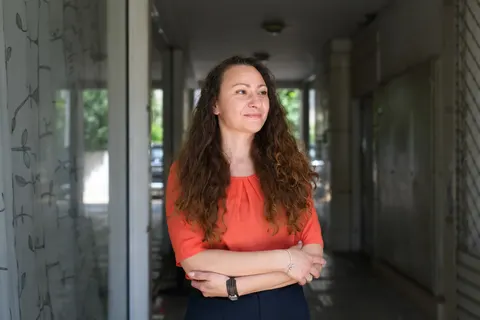
“Work, professional life, the drive to achieve corporate success and positions—this has become the mass culture of our society worldwide. To this day, many people find the meaning of their lives this way. From now on, we will have to change that. We will have to search for meaning.” We find ourselves in a time when the chatbot is not just an assistant but also a “therapist.” Before we even know it well enough, before we have laid down the ethical frameworks. We are already seeing the first challenges this brings, and the real problems are still on their way. Donika Borimechkova is a psychologist and psychotherapist with more than 15 years of experience. This time we decided to invite artificial intelligence itself to a therapy session. Because, as Donika says, many of her clients already get advice from it before they meet her. We never found a method or an approach that would let us run such an experiment, so we decided to discuss the subject, lay the foundations and then invite each of you to give us ideas on how to continue. Here is how this conversation begins.
 25
How AI Painted 10 Classic Bulgarian Verses: 2022 vs. 2026
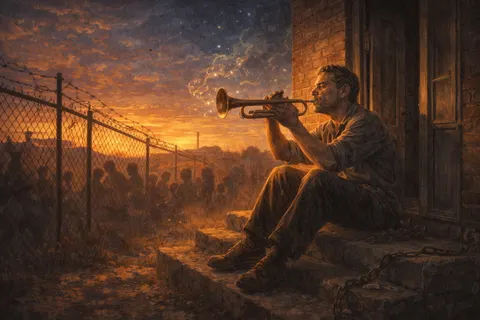
In 2022, I called on MidJourney, the first truly impressive AI image model, to carry out an unexpected task. I fed it 10 quotes from beloved Bulgarian poets to see what it would draw. The results were striking and thought-provoking, and it became one of the most read and discussed Digital Stories. Almost a whole five-year plan has gone by since then. What will the pictures drawn from the very same verses by today's most advanced models look like? AI will undoubtedly show more skill, but will it also show creativity, understanding? Will its illustrations come closer to art? Judge for yourselves… “Never in my life had I dared to hope for a compliment quite so kind: AI invited me—the newest AI—to its home for a glass of absinthe.”
 26
The Day Programmers Stopped Writing Code
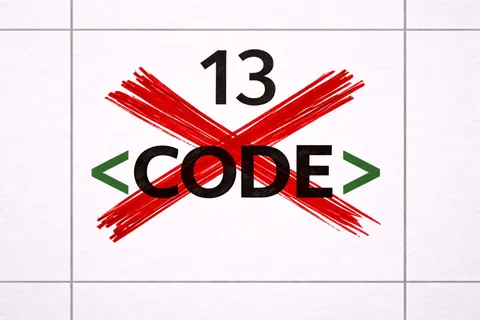
In just one month, some of the undisputed authorities from different generations and corners of the computer world rallied behind the same idea. Today, humans no longer need to write computer code, because artificial intelligence already does it better than we do. This Digital Story matters not only to the tens of millions of programmers but also because it is a powerful example. It is unfolding in the software world, but there is no reason it won't repeat itself in every other field where AI is arriving more slowly, yet just as relentlessly. Maybe it's time to “get off” our keyboards. But… what do we take up then? What will programmers do when they no longer write code?
 27
Poet + AI = Apollo ex Machina: Meet the Winners
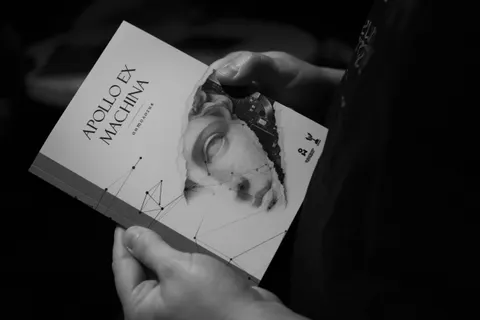
The time has come to announce the winners of Apollo ex Machina, Bulgaria's first (and one of the world's first) competition for poetry created with the help of artificial intelligence. The jury's picks were revealed at a ceremony in the Sofia City Library, where the anthology of selected entries, published by Scribens, was also presented. In a moment you can read the best poems and judge for yourself how good they are.
 28
Go: The Great Game
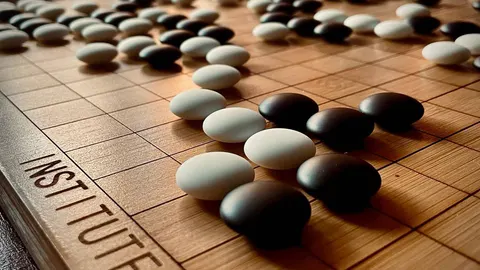
Two people stare stubbornly at rows of neatly arranged, round, flat stones. Just a game, you might say, but it is not that simple—not at all. This is not only one of the oldest games we know but also the most complex, and for a long time we considered it humanity’s last bastion, the place where technology could never overtake us. When it finally did, a remarkable new digital story was born.
 29
What Do Bulgarians Think About AI Today?
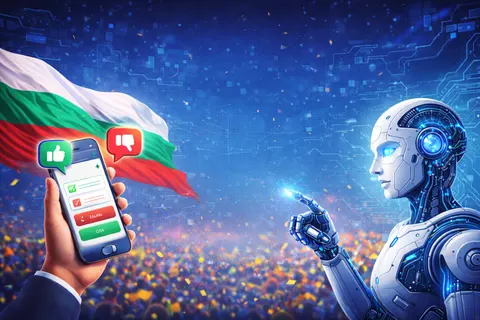
What do you think about artificial intelligence? Is it a danger or an opportunity? The future or the present? Marketing or a colossal breakthrough? In December I invited anyone willing to fill out a short but important survey, the same questions I asked a year and a half ago. Nearly 350 people took part this time, and now it is time to compare the two rounds, look for trends and sketch together today's landscape of how Bulgarians feel about the most discussed, most dizzying technology of our time.
 30
How Henry Kissinger Foresaw the Future
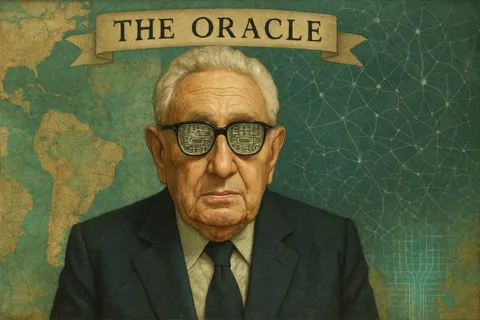
“There are two ways to make sense of the present situation. The first is by projecting from the familiar. Until now, the most transformative technologies created by humanity have served to refine or amplify our bodily capabilities. (…) Is AI simply one more extension of human capabilities? The second way of making sense of it assumes that this time the situation is different—that AI possesses unique qualities that cannot be reduced to an upgrade of human abilities. Within a few decades, through engineering, an analogue will be created of what evolution has been building over millennia—namely the human brain: the last organ left to be reproduced or reimagined inorganically.” We are not simply living in dynamic times in which we humans fail to keep up with technological progress. We have reached a moment when technology itself is making us start over. We have to redefine many of the concepts and systems that make up our lives—from democracy and capitalism to art and creativity. That's not me telling you this, but good old Henry Kissinger, who, on top of everything, is sending his messages about the future and artificial intelligence… from the beyond. The final work of one of the defining figures of the 20th century has recently come out in Bulgarian—the work of the man to whom we largely owe the fact that the Cold War stayed cold instead of turning into World War III. Genesis: Artificial Intelligence, Hope, and the Human Spirit gathers Kissinger's crucial views on the future we are already living in. Here are 14 of its highlights; may they finally spark the overdue public conversation about the future of humanity in the age of advanced technology and artificial intelligence.
 31
AI: Revolution or Marketing Hype? Your Opinion Matters! (Survey)
Is artificial intelligence unjustified media hype or the great force that will change our future as a species? Will it open incredible opportunities for people, or turn the world into a digital concentration camp? Your opinion is extremely important, and I will be grateful from the bottom of my heart if you share it in a short survey! Prizes await too: selected books! Responses are collected until December 31. You can choose which questions to answer. The survey is anonymous. Every response, every share is invaluable help in seeing how we relate today to the great technological subject of our time!
 32
“If It’s Beautiful, Does It Matter That AI Wrote It?”
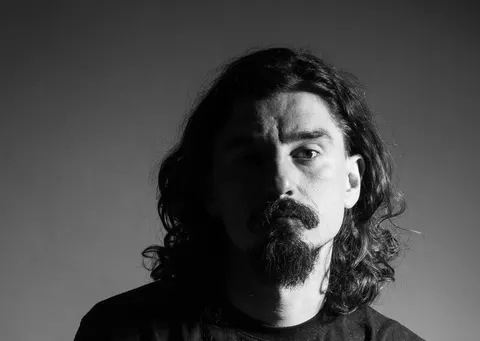
Is there room for poetry in the age of TikTok and artificial intelligence? How do we return this art to the pedestal it deserves? Can today’s poets be influencers, and should they? Is the time when artificial intelligence can no longer be separated from poetry frightening, or a dream come true? Apollo ex machina is the name of Bulgaria’s first competition for poetry created with the help of artificial intelligence, and now is the moment to join in! The venture’s special name was coined by today’s guest. Besides sitting on the competition jury, he runs the publishing house Scribens, which will publish the best poems from it in a collection. Georgi Gavrilov is a poet and… a physicist. He founded Scribens to give young Bulgarian authors a chance to reach their readers.
 33
“Engineers Will Always Be in Demand. But Our Skills Have to Change”
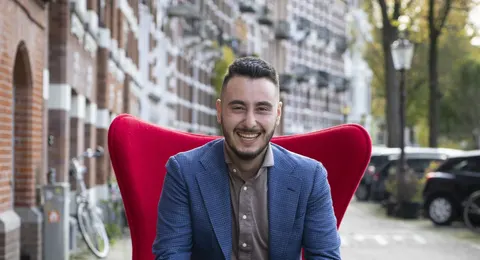
Work in the software world has already changed fundamentally with the arrival of artificial intelligence. On November 29, at the conf.ai workshop, Djemal Ahmedov will harness AI agents and make them work as an entire software team. Before that, we talk about the chaotic present and uncertain future of software in the age of advanced AI, and about whether there will always be a human in the loop.
 34
“No, Now Is Not the Time for Poetry!”
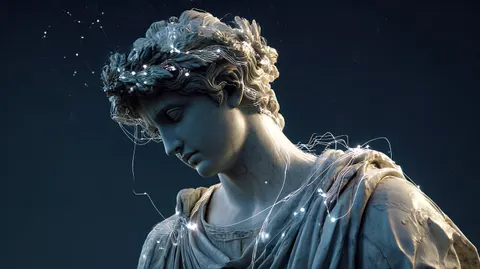
What is poetry written with the help of artificial intelligence? Does AI write it alone, does it depend on the task the human sets, or can the two find a way to create something different together?
 35
Apollo ex machina: Enter Our Contest for AI-Generated Poetry!
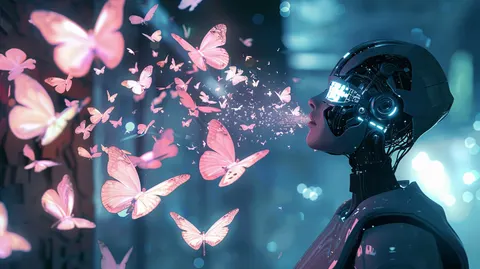
Enter Apollo ex machina, the first Bulgarian contest for generated poetry, organized by Digital Stories and Scribens Publishing! There are no limits on theme or length. The only requirement is that you submit verse you have created with the help of AI. You may send up to 3 works, and the deadline is December 1, 2025. The winner will receive a prize of 300 leva (about $175), selected books await the well-deserved second and third places, and the best poems will be published by Scribens in a poetry collection! They will be chosen by a distinguished jury: the poets Petar Chuhov, Boyko Lambovski and Violeta Kuneva, Scribens managing director Georgi Gavrilov, and the creator of Digital Stories, Georgi Karamanev.
 36
What Kind of “Person” Is AI? A Psychological Experiment
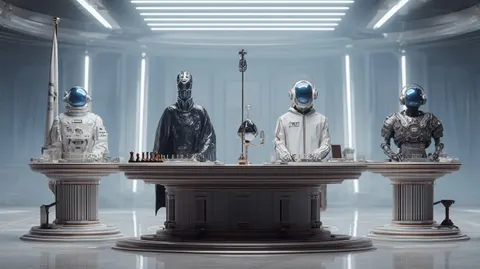
We invite four of the most popular AI models into the psychologist’s office to find out what kind of “personalities” they turn out to have! Domineering or easily swayed, sensitive or pragmatic? What are GPT-5, Claude Opus 4.1, Gemini 2.5 Pro and o3 like by “character”?
 37
Living Your Imagination
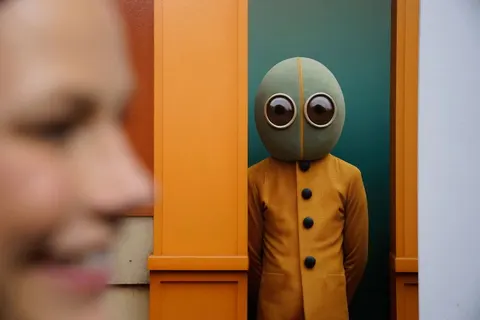
You can hardly have missed this modern debate, and you probably have your own opinion on it: now that artificial intelligence produces results indistinguishable from human creativity, will we go on creating? Is the great hero of our day taking over the human role of author, or is it just another link in history's long chain, the new tool that will give birth to the next arts, genres and forms? Welcome to the world of David Szauder. For the Hungarian multimedia artist, reality is only a starting point—life unfolds in the boundless space of the imagination, where technology is the artist's new brush and the absurd and the beautiful meet and complete each other.
 38
The EdAItor Test: Can Artificial Intelligence Edit a Text?
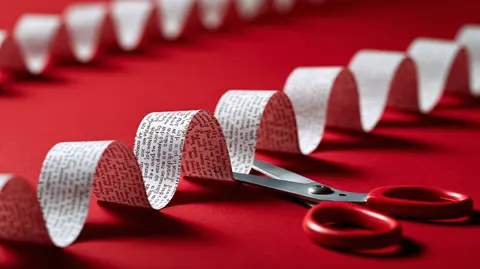
While we debate whether artificial intelligence will ever write indistinguishably from a human (and it already can!), everything quietly changed. Whether we realize it or not, we now read algorithm-generated texts every day. The latest undeniable proof surfaced on social media a month ago: some of the most respected Bulgarian media outlets uncritically published texts riddled with the telltale sentences that unmistakably show they were written by ChatGPT or its kin, and that were not even read by their “author” before going online. So can't we invite AI to save us… as an editor? Not long ago we tested how some of the most advanced AI models perform as proofreaders, and now it is time to raise the bar. In our next major experiment, we put AI's skills as an editor to the test.
 39
“We Can No Longer Think Only About Endless Growth!”
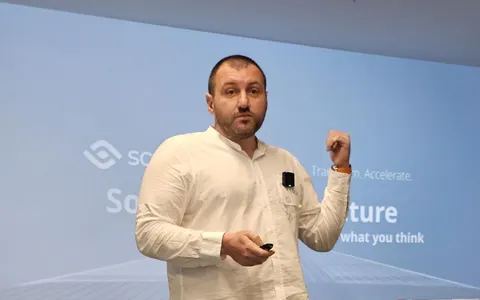
“Right now we don't have the conditions for AI to develop dramatically,” says Krasimir Kostadinov, chief technology officer of Scalefocus, who argues that the future of IT has aspects even more important than artificial intelligence. After his provocative talk at the 9th DEV.BG All in One conference, we continued the conversation about the Bulgarian dimensions of the IT future. Is it worth entering IT in Bulgaria today, and which qualities matter in the dynamic times we live in?
 40
Can We Tell a Generated Voice from a Human One? The Answer Is Clear
Can you tell a human voice from one generated by algorithms? 2,036 people took part in the Digital Stories experiment looking for the answer to this question, along with many other important nuances. The result, in my view, is unambiguous…