

Singularity: When Computers Become “Smarter” Than Us
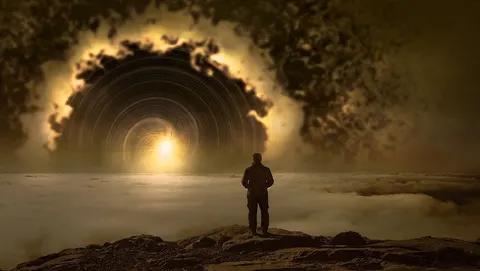
Computers keep getting faster and more sophisticated, and at some point they will move beyond our ability to judge them. That point is called the “technological singularity,” and according to Ray Kurzweil, the researcher who popularized it, it will arrive in 2045. Some consider him a brilliant forecaster, others a charlatan. Either way, it is worth asking whether, at such a moment, artificial intelligence will help us solve humanity’s eternal problems—or enslave us…
 142
Car, Take the Wheel!
Autonomous cars have been a recurring topic for years. We were supposed to be done with driving by now, and that step still seems close… But is it really? Why is this innovation so important and so eagerly awaited? Here is a brief snapshot of the subject and the challenges ahead.
 143
The Fake News Hunter
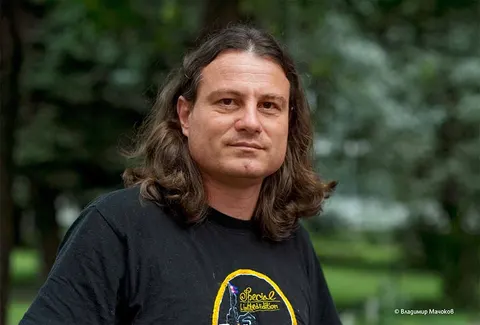
It is called Tanbih, it comes from Qatar, and it promises to rescue us elegantly from fake news and disinformation. We meet its creator, Dr. Preslav Nakov, a world-class specialist in natural language processing with artificial intelligence. How can an algorithm tell that a news story is fake… before it has even been written?!
 144
Robot Pavlovich Chekhov: Artificial Intelligence as a Writer
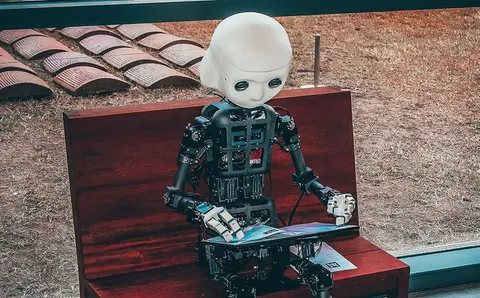
“There is nothing to writing. All you do is sit down at a typewriter and bleed,” said Hemingway. Can we teach artificial intelligence to create gripping literature, and how will the cultural world change if we do? Here are the most exciting projects and the arguments of the two extremes: that the robot writer will become reality, or that algorithms will never reach the human emotion of a text.
 145
“AI Revolution!” When the Hype Goes Too Far
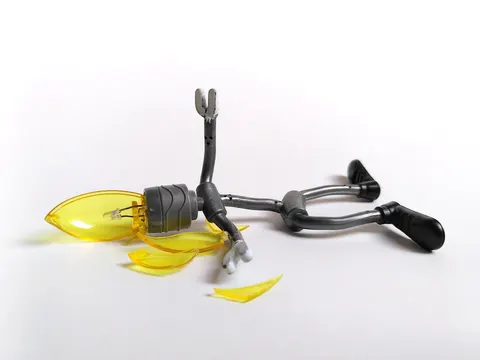
“Artificial intelligence” has become such a fashionable phrase, a marketing cliché that is often completely devoid of meaning. We are all excited about the possibilities this kind of technology brings, but sometimes… the results can be comical and even dangerous.
 146
Will Artificial Intelligence Take Programmers' Bread?
Could artificial intelligence put programmers out on the street in the foreseeable future? Today it is a particularly promising time to enter the profession, but will that still be true once algorithms get better at writing code? The question came up loudly with the launch of GitHub Copilot, yet it runs much deeper and is far more interesting. We have gathered plenty of arguments for and against, and we leave the answer to you.
 147
Robots in Power
“There’s no one to vote for”—we say it and hear it so often. Clearly the Western model of democracy, and our own feeble variety of it, is in crisis… Could the moment have come for artificial intelligence to change things? Is it time to start a revolution with the new Bulgarian Robot Workers’ Party?
 148
Outrunning the Virus
The pandemic is just beginning. Machine learning specialist Youyang Gu comes across wildly contradictory mathematical forecasts of how the situation will unfold. He decides to build his own algorithm and model using neural networks, and quickly becomes a star, because his model produces far more accurate forecasts than those of scientific units with multibillion-dollar budgets.
 149
GPT-3: A Cozy Chat with Artificial Intelligence
GPT-3. Behind this rather dry computer acronym hides a highly promising technology that takes quite a decisive step forward in the way we perceive artificial intelligence. It is the most powerful new-generation language model, which appeared less than a year ago and showed that neural networks are now capable of creating meaningful, emotional texts, sometimes sounding downright like art. And they can even write… computer code on their own!
 150
The Deep Lie: Could Deepfake Technology Start a War?
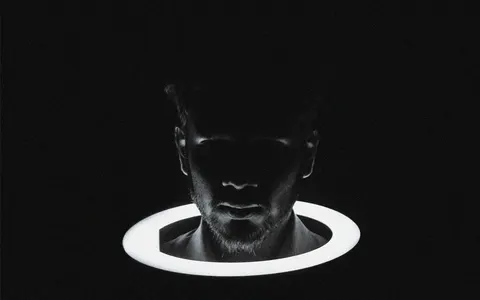
Deepfake technology makes it possible to create a video starring real people that is nonetheless completely fake. Could it lead to war? And how did neural networks suddenly become capable of producing the perfect forgery?
 151
Artificial Art: Are Computers Learning to Create?
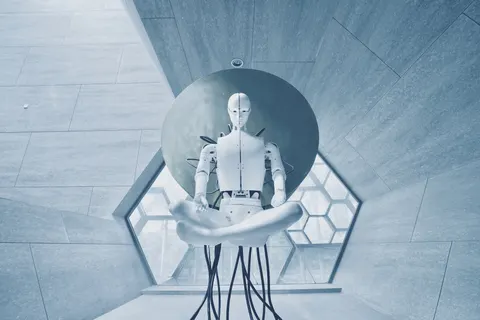
Is it mostly a marketing trick, or will artificial intelligence soon paint like a master? Can we teach a computer program to create music, or literature? For a long time we were certain that this is one of the things that set people apart from machines—the lack of imagination, of artistry, of the ability to express oneself through art. But is that really so?
 152
Radostin and the Neural Network
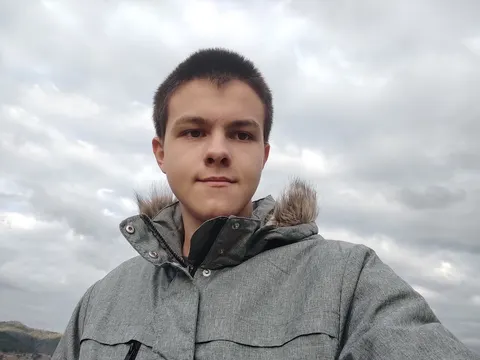
Radostin Cholakov is only 15, but he already has solid experience as a programmer. His latest project is the AzBuki.ML platform. Thanks to it, we will soon be able to use the most advanced AI text-processing capabilities in Bulgarian.
 153
News or Blame? The Robot in the Newsroom
Every day we already read articles written by a robot. Today the most valuable resource isn’t oil, or money. It isn’t gold, it isn’t even power. At the epicenter of the computer revolution, everything is information. Zdravko wants to be a journalist; Zhelyazko is an artificial intelligence. Who does the future belong to?