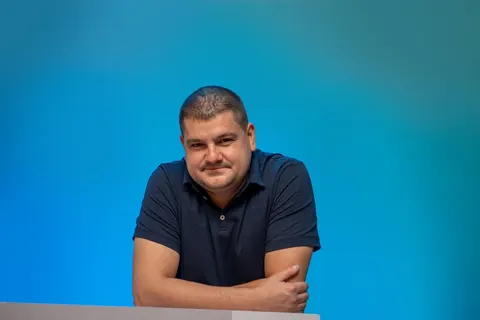

“Truly Intelligent AI? Only If We Take the Next Big Step”
Viktor Botev and his team are building a successful product in one of the most high-tech fields of artificial intelligence, yet his enthusiasm for the near future in which AI will change us all is far from the sweeping expectations of the day. For eight years he has been chief technology officer of Iris.ai, a Norwegian-Bulgarian startup that applies AI to vast bodies of scientific data. A long, human conversation about technology for connoisseurs: hallucinations, the limits of large language models, and why the era of Bulgaria's outsourcing companies is over.
 82
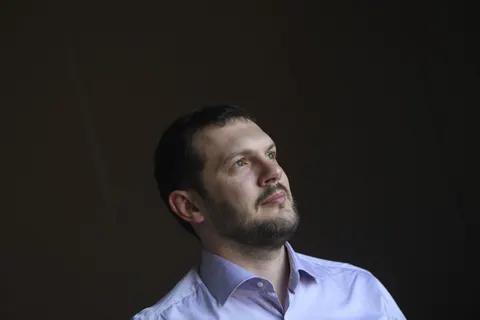
Elections + Artificial Intelligence: The Perfect Storm
This year nearly two-thirds of the planet will vote, one way or another, for those who will govern them, and for the first time it is happening in the age after ChatGPT. Can artificial intelligence become the deciding factor, can we avoid being manipulated, and could technology one day change how our societies are run? Here are eight reasons to stop and think.
 83
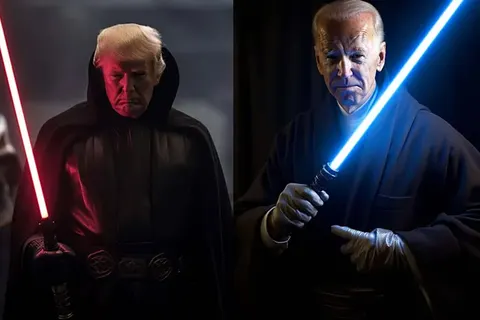
“AI Has Already Changed the Translator’s Job”
Did you know that automated translation systems are at work all around us? That a huge share of administrative and commercial texts are translated into every language by artificial intelligence, and the job of humans is to check and correct them? They are no longer even called “translators” but “post-editors.” Rada Gankova returns to talk about her main work, translation, and how artificial intelligence is changing it.
 84
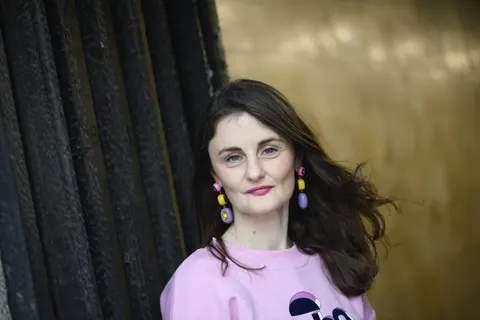
How DALL·E “Read” Beloved Bulgarian Books
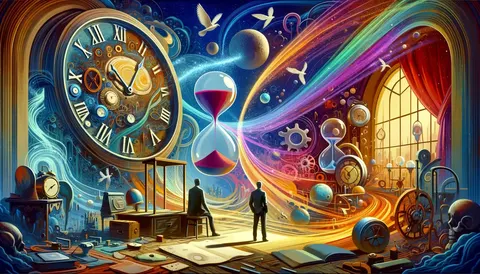
The Chukchi is no reader, he’s a writer, as the old Soviet joke goes. But what about ChatGPT? Time for another fascinating experiment to show what today’s algorithms can do, both at creating images and at understanding context. I will ask DALL·E 3, part of the paid version of ChatGPT, to illustrate classic works of Bulgarian literature from different periods. Why is this interesting? It will show how well the large language model works in Bulgarian and how far it recognizes some of our undisputed classics. And, not least, because… might it show us some unexpected, different, striking points of view? Could we speak of some form of collective unconscious? Will the pictures overlap, at least in part, with the images each of us carries in our head for these books?
 85
“I Imagine the Future as a Battle for the Invisible”
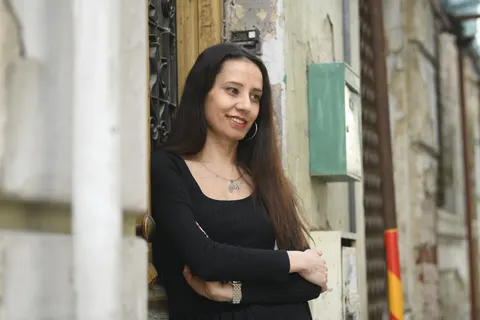
“For now, artificial intelligence strikes us as funny. It looks like a funhouse mirror, or a little dimwit we guide along, one who makes us feel knowledgeable and more human than ever. But this is changing literally by the day, and soon it will become a realistic and credible reflection of us. I think about that moment—perhaps then we will manage to see ourselves through its eyes, to grasp which parts of us are clear even to an artificial creature, what remains out of its reach, and what is most precious. To me, those are the places it cannot peer into. I imagine the future as a battle for the invisible; that will be the most important resource. What artificial intelligence cannot register is the most precious thing in us.” Pochti vsichko e nared (Almost Everything Is Fine) is the title of poet Violeta Kuneva’s debut collection, and it captures with such precision how the world feels to us today. But how did it come to this, that we can no longer tell the poet from the algorithm? What do we lose if that is so? Is the problem that, en masse, we have lost our yardstick for art, for metaphor, for layered, living texts that are human by definition, as poems are? Will poetry come to an end, or… is it precisely poetry that can save us from ourselves?
 86
The AI Detective: Can Technology Give Us Back the Truth?
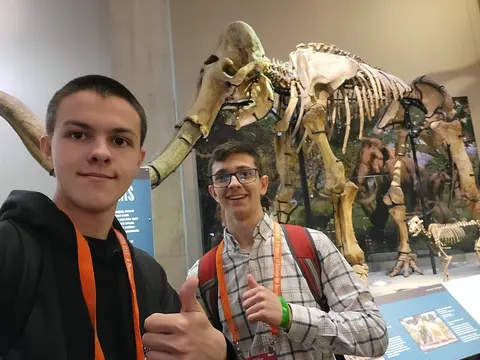
After a Digital Stories experiment with almost 2,000 participants showed that we can no longer tell AI-generated images and texts from real ones, it is time for the next step: could artificial intelligence itself become our salvation in this unequal battle for the truth? Radostin Cholakov, from the Rhodope village of Barutin, and his friend Delyan Boychev, both finishing high school this year and both already accomplished in the world of neural networks and computer vision, decided to find out. AI creates remarkable images today, but can it tell truth from lies and judge which picture was made by a human and which by an algorithm?
 87
ChatGPT vs. the Champions: The Last One Wins!
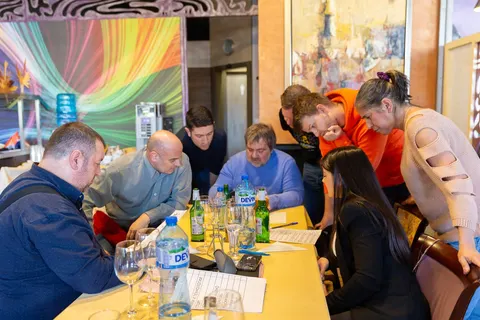
Do you know which place in Bulgaria had the highest average IQ on March 16, 2024, between noon and 6 p.m.? ChatGPT couldn't even guess. But I know the answer. No, it wasn't the National Assembly, Bulgaria's parliament. Eighty people had gathered in a restaurant in Plovdiv for an intellectual contest, many of them familiar to anyone who follows trivia, quizzes and television knowledge games. Split into 10 teams, they faced one another and, at the same time… the aforementioned ChatGPT. No fewer than 33 of them had won the show The Last One Wins on BNT 1 at least once (myself included). Almost all of the most popular contestants, with impressive tallies of victories, took part. The rest of the 80 who joined the club were contestants on the show and fans of quizzes as a format. What kind of unusual contest was this? Who turned out to be the big winner? What is the future of intellectual games in our battle (or encounter) with technology? Why would anyone today need to know and remember facts that are an arm's length away online?
 88
“The Point Is Not to Kill Our Own Creativity”
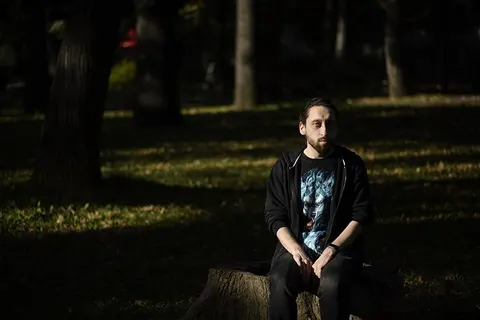
Is it still worth learning programming or data science, or is the future of software engineers doomed? Yordan Darakchiev, who is teaching Bulgaria's first one-year data science and AI module for the eighth time, talks about the challenges generative algorithms pose. His greatest hope is that we won't lose our curiosity and creativity, and he thinks mindless entertainment threatens them more than any AI ever could.
 89
How Much Does Truth Still Matter to Us?
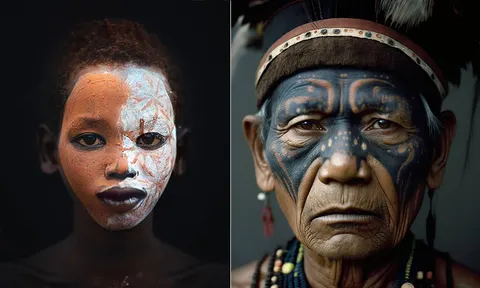
“How did we let the social contract slip away? Just like that, quietly…” We can no longer tell texts and images generated by artificial intelligence from those created by humans. That is the big takeaway from the Digital Stories experiment, in which nearly 2,000 people took part. We meet Nadya Shabani, a human rights lawyer and director of the Bulgarian Center for Not-for-Profit Law (BCNL), and Radina Banova-Stoeva, a human rights lawyer and legal consultant at the center, to ask how we will tell the truth from now on, whether attempts to regulate AI are doomed, and why the decisions we make about it today matter so much for the future of our civilization.
 90
Human or AI: Can We Still Tell Who Made It? (The Results)
Can we tell what was made by artificial intelligence from what was made by a human? Let me start with the short answer: we can’t. That is the main conclusion of the experiment held on the Digital Stories site, but there are so many other curious details that should make us stop and think… Did Hieronymus Bosch or Petko Slaveykov prove harder to recognize? Maria Zhekova’s dishes or Violeta Kuneva’s stanzas?
 91
Human or AI: Can You Tell Who Made It?
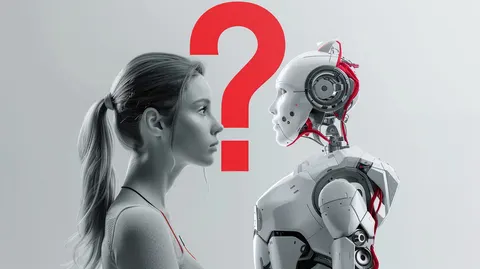
Can we still tell what a human has created from what artificial intelligence has generated? Let's run an experiment together that may yield some very interesting answers. Thirty quick questions, about 5 minutes is enough. All you have to do is decide which of the images and texts were generated by AI and which were made by people. Join in and give it a try! Invite your friends too! The more people take part, the more interesting the results will be! Responses will be collected for two weeks, until March 8, 2024. Five participants will receive a gift.
 92
Can Algorithms Make Art? 15 Viewpoints That Matter
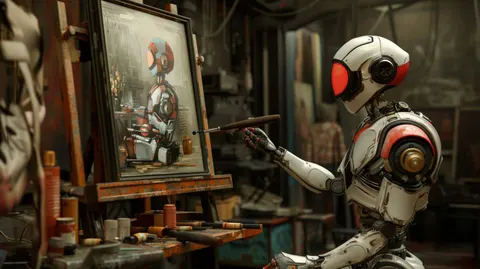
Can algorithms create? Is artificial intelligence a tool or an author? Could AI give birth to the arts of the future, or has creating already become a pointless pursuit? What will we do when its works in every field become indistinguishable from ours? For three years now, I have been collecting viewpoints on this site about the big questions of today's technological day. I believe it is vital to bring more and different voices into the discussions on important topics, and art and creativity is unquestionably one of them. Here are 15 of the most interesting and substantial opinions I have gathered in that time. Do the words of tech people, writers, artists, clergymen and… tomcats contradict each other, or do they complement one another?
 93
How to Generate Yourself an Influencer
How could you not like Elena Dimitrova, or simply EcoElena? Blonde, smiling, upbeat, she travels, lives in harmony with nature, hands out useful tips and offers exotic recipes. There is just one more detail: she doesn't exist, and in a month of posts in her name, 84,519 people saw her, nine proposed romance, and not one noticed that every letter and pixel was generated by AI.
 94
Dr. Fiziev, the Man Teaching AI to Read Our Genes
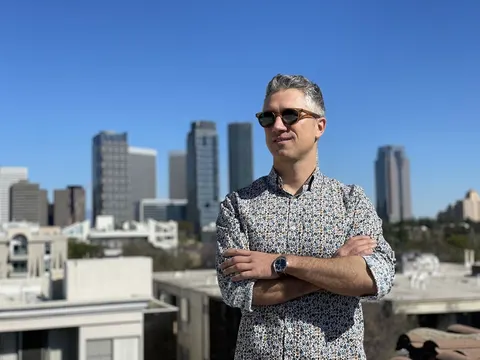
“The combination of genetics and artificial intelligence is extremely powerful, and I expect big news in the coming years,” says Dr. Fiziev. Why is it so hard to tell which of our genes are to blame for a given problem, what do we gain now that anyone can read their own genome, and did we overestimate heredity as the main factor in whether we stay healthy? Dr. Petko Fiziev, a bioinformatics specialist who leads an AI team at Illumina in the heart of Silicon Valley, also talks about the future of gene editing and “designer babies.”
 95
Is There Still Such a Thing as a Foreign Language?
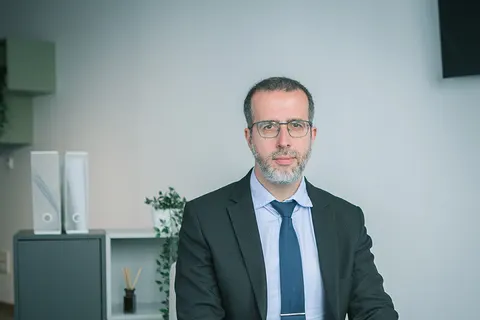
Is there any point in learning foreign languages? Machine translation has developed astonishingly fast, and today it captures much of what needs to appear in another language… Have we reached the limit, and what comes next? Kaloyan Kirilov, a translator and interpreter with nearly two decades of experience, on the art of translation in the age of advanced artificial intelligence—and on whether we can teach an algorithm to curse convincingly enough to sound like a native speaker.
 96
Meet… Yourself?!
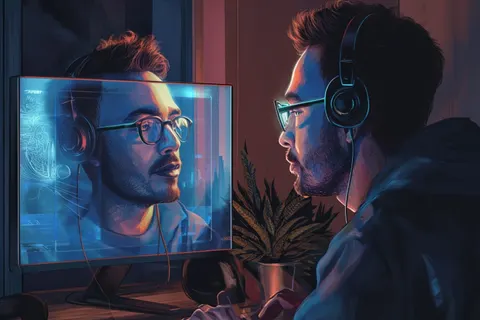
“Talking to yourself isn’t so bad. It gets bad when you start answering.” I am going to create a virtual double of… myself. What could we possibly have to talk about?
 97
“AI Is a Crude Jolt That Will Wake Humanity Up”
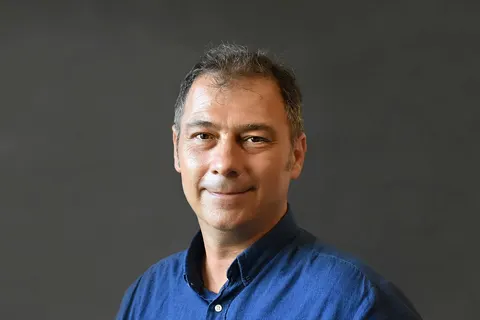
How is technology about to settle the eternal battle between dictatorship and freedom? Why might the great technological threat to humanity actually come from the East? And this backed by the serious arguments of a man who knows China and its peculiarities up close. Technology specialists, artists, scientists, entrepreneurs and even clergymen have shared their views on technological change with Digital Stories. Now the time has come for a fascinating meeting with a special guest from the world of design. Svilen Gamolov is a world-renowned product and interior designer who has worked for more than 23 years in Bulgaria, Cyprus and China. In 2018 he made the top 100 of the Design Intelligence Award world design ranking in Hangzhou, China. That same year, in Como, Italy, he won a platinum design award in a competition with 45,906 projects from around the world. He is working to turn Varna into a meeting place for design in Bulgaria and the world through Design Hub Varna. He runs Gamolov Design Studio. What will the homes of the future look like? Why will the real estate market change from the ground up in just a few years? Should humans give up competing with the machine and learn to offer an alternative instead? Why is technology here to wake us from decades of complacent stagnation?
 98
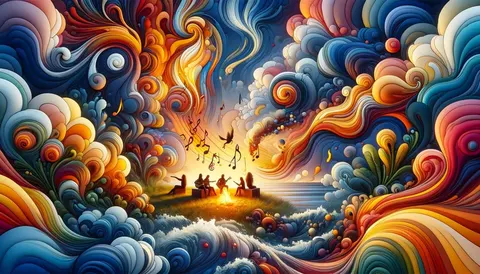
AI Built a Cell: How an Algorithm Painted Beloved Bulgarian Songs
Artificial intelligence now creates images hard to tell apart from photographs, and that can even change history—but has it learned to “paint” originally, impressively and without obvious blunders, even when the description is abstract, poetic and laden with meaning? Let’s reflect on that with a short but instructive experiment: how will ChatGPT cope with illustrating the lyrics of beloved Bulgarian songs? I pick 16 Bulgarian poetic works from different eras and genres completely at random, some of the most recognizable verses ever to become melodies, and see how the algorithm draws them.
 99
“Is There Any Part of Our Lives AI Won’t Change?”
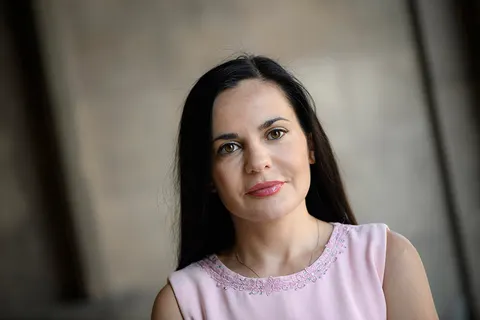
Why are we so unprepared for the great changes technology is bringing us? Can we catch up? What are the most important pieces of news to expect in the new year, 2024? Why is the revolution in every area of our lives irreversible and even closer than expected, with the full force of scientific argument behind it? Why is it important to shake off the petty concerns of the day as soon as possible and, faced with enormous challenges, come together? Assoc. Prof. Mariana Todorova is a futurologist at the Institute of Philosophy and Sociology of the Bulgarian Academy of Sciences. “Within just 5 years, technologies based on artificial intelligence will enter every field. They will be around us from birth to death,” she said in our conversation in 2022. And in the first days of 2024 she is even more categorical: “Now it is 100 percent certain. I think there are 2-3 years left, and that depends on how prepared we are, not on what the technologies themselves can do. If you can think of a field that won’t be heavily affected by artificial intelligence, challenge me, so I can prove you wrong…” How do we prepare for that future?
 100
“We Have No Idea What We Are About to Create!”
“We need to dial down the arrogance. We technocrats, the tech community, have to step into the role of responsible leaders of what is happening, not people profiting from their amber towers. Otherwise this will not end well.” Dobroslav Dimitrov is a co-founder of Imperia Online and chairman of BASSCOM, the Bulgarian Association of Software Companies. When progress in artificial intelligence caught everyone's eye, he stood out for his positions: that nothing would be the same after the arrival of ChatGPT and its kin; that no area of our lives would be left unshaken to its foundations; that this is also our chance, as a country and as a tech sector, to make enormous progress. A year later his view remains the same, now backed by experience. We talk about the coming social changes and the role of the tech sector, in Bulgaria and abroad, and about the demand for programmers. About the gradual and irreversible advance of artificial intelligence. About the technological divides that confront us with an existential risk, and the other big questions of the day.