
Don't Miss the Bus! What Open Data Can Do for a City
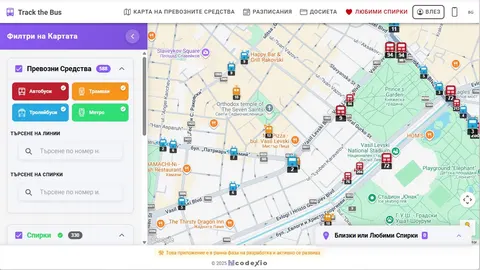
Every autumn, Sofia starts choking on the traffic of hundreds of thousands of cars it was never built for, and we all ask whether it really has to be this way. Google Maps helps us plan a route, but it rarely knows when the next bus will actually come, or whether it will be packed to the doors. Open data could help the city breathe again, as the fascinating story of my fellow programmers at Codexio shows.
 62
“No, Now Is Not the Time for Poetry!”
What is poetry written with the help of artificial intelligence? Does AI write it alone, does it depend on the task the human sets, or can the two find a way to create something different together?
 63
Apollo ex machina: Enter Our Contest for AI-Generated Poetry!
Enter Apollo ex machina, the first Bulgarian contest for generated poetry, organized by Digital Stories and Scribens Publishing! There are no limits on theme or length. The only requirement is that you submit verse you have created with the help of AI. You may send up to 3 works, and the deadline is December 1, 2025. The winner will receive a prize of 300 leva (about $175), selected books await the well-deserved second and third places, and the best poems will be published by Scribens in a poetry collection! They will be chosen by a distinguished jury: the poets Petar Chuhov, Boyko Lambovski and Violeta Kuneva, Scribens managing director Georgi Gavrilov, and the creator of Digital Stories, Georgi Karamanev.
 64
What Kind of “Person” Is AI? A Psychological Experiment
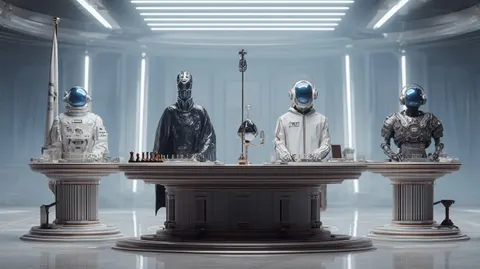
We invite four of the most popular AI models into the psychologist’s office to find out what kind of “personalities” they turn out to have! Domineering or easily swayed, sensitive or pragmatic? What are GPT-5, Claude Opus 4.1, Gemini 2.5 Pro and o3 like by “character”?
 65
Living Your Imagination
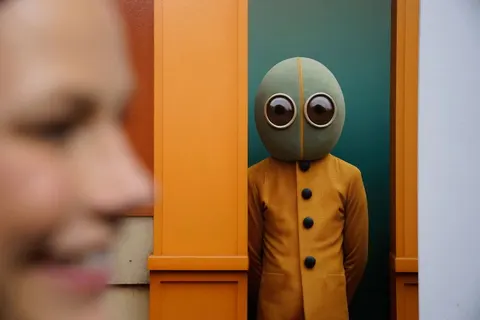
You can hardly have missed this modern debate, and you probably have your own opinion on it: now that artificial intelligence produces results indistinguishable from human creativity, will we go on creating? Is the great hero of our day taking over the human role of author, or is it just another link in history's long chain, the new tool that will give birth to the next arts, genres and forms? Welcome to the world of David Szauder. For the Hungarian multimedia artist, reality is only a starting point—life unfolds in the boundless space of the imagination, where technology is the artist's new brush and the absurd and the beautiful meet and complete each other.
 66
The EdAItor Test: Can Artificial Intelligence Edit a Text?
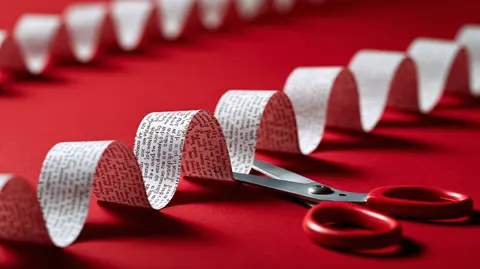
While we debate whether artificial intelligence will ever write indistinguishably from a human (and it already can!), everything quietly changed. Whether we realize it or not, we now read algorithm-generated texts every day. The latest undeniable proof surfaced on social media a month ago: some of the most respected Bulgarian media outlets uncritically published texts riddled with the telltale sentences that unmistakably show they were written by ChatGPT or its kin, and that were not even read by their “author” before going online. So can't we invite AI to save us… as an editor? Not long ago we tested how some of the most advanced AI models perform as proofreaders, and now it is time to raise the bar. In our next major experiment, we put AI's skills as an editor to the test.
 67
“We Can No Longer Think Only About Endless Growth!”
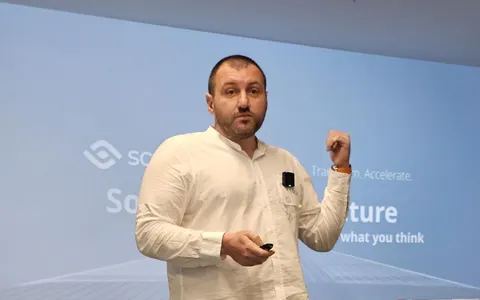
“Right now we don't have the conditions for AI to develop dramatically,” says Krasimir Kostadinov, chief technology officer of Scalefocus, who argues that the future of IT has aspects even more important than artificial intelligence. After his provocative talk at the 9th DEV.BG All in One conference, we continued the conversation about the Bulgarian dimensions of the IT future. Is it worth entering IT in Bulgaria today, and which qualities matter in the dynamic times we live in?
 68
Can We Tell a Generated Voice from a Human One? The Answer Is Clear
Can you tell a human voice from one generated by algorithms? 2,036 people took part in the Digital Stories experiment looking for the answer to this question, along with many other important nuances. The result, in my view, is unambiguous…
 69
“Bulgarians Are Getting Smarter”
How is it that over the past 30 years Bulgarians… have been getting smarter, according to the only organization that provably measures this? Are programmers the largest group among those who pass the Mensa tests? Does intelligence still matter when technology handles more and more mental tasks, and why, in the days of the AI revolution, is it more important than ever to develop our minds?
 70
ChatGPT, 1981
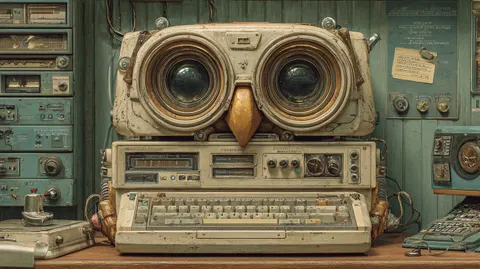
Is AI the great chance of our day? Will we seize it, or let it slip? Propusnatiyat shans (The Missed Chance) is one of Lyuben Dilov's lesser-known books. Here one of Bulgaria's most popular science fiction writers, also known as the author of the Fourth Law of Robotics, isn't even a writer—at least according to the plot. Instead of writing, he orders a series of stories in various genres from his new computer, which creates them in his name and in his style… Sound familiar?
 71
“Sadly, Football Is Becoming More and More of a Reality Show”
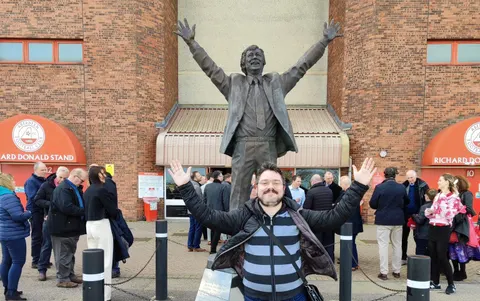
If you love sport, I recommend this conversation. It will make you think in some very unexpected directions. “Walking encyclopedia” is a cliché that is no exaggeration for a handful of Bulgarians, and in my view today's guest is one of them. Teodor Borisov is a sports journalist who travels the planet in search of powerful football stories that are still being born in these technological times. A historian and author of books on Bulgarian history and sport, he writes questions for many of the most popular TV quiz shows, a path that began when he won Minuta e mnogo (A Minute Is a Lot) three times. There is nothing from the past of Bulgarian (and not only Bulgarian) sport you can ask him about that he doesn't know. Today, though, something different will happen. I will ask him about the future. About the magic of sport and King Football. About the commercialization and oversaturation that come with technology and can drive away even the most loyal fans. About the crisis of authority.
 72
“That’s It! No Phone!” No—What Matters Is What the Child Does With It
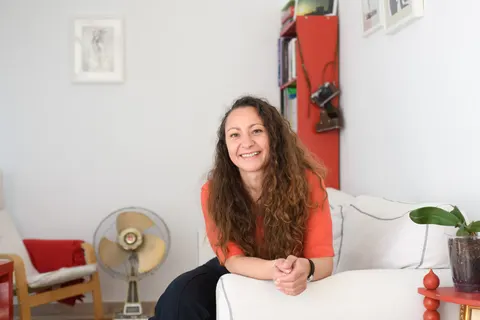
How do we find the balance so that children use technology to the full without it leading to problems? A long series of important Children’s Digital Stories set out to help us search for that delicate middle path. More than 350 parents and relatives of children up to age 11 took part in the site’s survey. Donika Borimechkova is a psychologist and psychotherapist with more than 14 years of experience who works with children of all ages. Before turning to psychological counseling, she spent 5 years on the staff of a public kindergarten. She holds a bachelor’s degree in primary and preschool education and a master’s in developmental psychology. We prepared the survey together, and now it is time to discuss the results and look for the key points. About the fear of the digital, about the great challenges of technology and artificial intelligence. About balance. As in the other conversations, the emphasis falls on useful advice which, I hope, will help more adults help the children around them so that technology becomes their friend.
 73
“Right Now, the Conditions Simply Aren't There for AI to Make a Dramatic Leap”
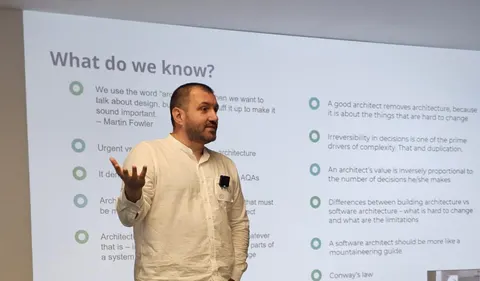
With Krasimir Kostadinov you can talk about geopolitics, astrophysics and history, all in the context of technology, the march of time and the trends that shape all our lives. He is the chief technology officer of Scalefocus: an engineer, architect and programmer with wide-ranging interests and deep knowledge, which he often shows off in his tech blog. In his current role, one of his direct duties is… to peer into the future, trying thoughtfully, sensibly and from every angle to predict where technology is taking us. We will peer into the future with him, for a sober and very different look at AI and the other big themes of the new age. Join us for a stroll through what lies ahead!
 74
“Kids Today Are Still Curious!”
If anyone can compare how the knowledge of Bulgarian language and literature is developing, both in high school graduates and in AI, it is today’s guest. For the second year running, Mr. Svetoslav Stoychev took part in the Digital Stories experiment that tested how the newest AI models handle the national school-leaving exam, and this time he helped bring in two real graduates. Now we talk about the results, about students’ love of books, and about what keeps a young teacher burning for the profession in the age of artificial intelligence.
 75
“I Don't See Programmers Disappearing”
Minko Gechev holds a black belt in karate… and, as a seasoned senior developer at Google, in programming too. Last time we followed his fascinating path from the small Bulgarian town of Troyan to one of the software giants of our time; now we turn to some of the most exciting questions of the day: what the future of software engineering looks like from its Mecca, Silicon Valley, whether the programmer's profession will survive at all, what is worth learning today and whether we can prepare for an exciting but challenging future. And how does our guest rediscover the wisdom of the East at the very heart of Western technology?
 76
“AI Is Everyone’s Big Chance to Climb Their Own Everest”
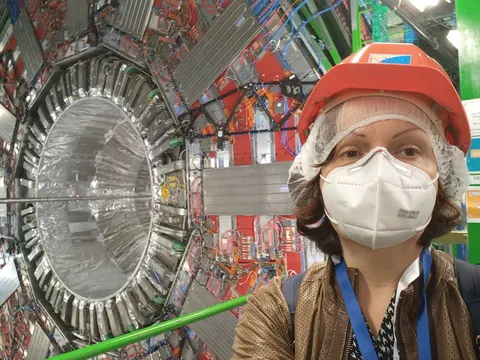
“The world stands at the Rubicon. We will live alongside smart machines, a new and different world awaits us, but are we ready for it?” That question, the very reason Digital Stories exists, is posed on the cover of her new book by today’s guest, Petya Minkova. In The Transition from the Digital Age to the Hybrid Civilization, she traces the long road from the first computers to a future of superpowerful artificial intelligence. And while the answer to whether we are ready is clear, there are so many other important questions we will discuss in the lines below! Do we have any future other than as a hybrid civilization of humans and technology? What does our survival depend on, and what will our daily lives look like once this transition hits with full force? Why is AI far more than a danger—why is it also a chance for each of us to climb our own personal Everest?
 77
Isn't the Ordinary Person the Most Extraordinary of All?!
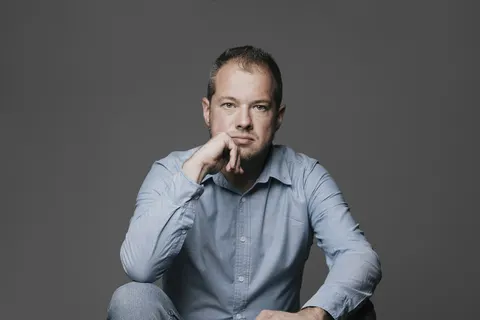
Nikolay Terziyski, a writer and journalist born in Smolyan in 1983, returns to Digital Stories with Rodinia, a novel of 16 stories written over ten years. It is a book of journeys and homecomings, about coming together, drifting apart and the bonds that memory and words keep alive between us. A conversation about islands and continents, imagination and imperfection, and what AI may take from us.
 78
Child or AI? Could 4,000 People Tell Who Drew It?
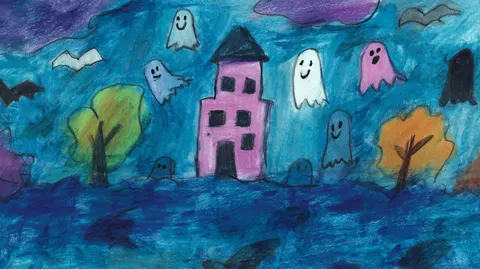
The “Child’s Drawing or AI?” experiment drew enormous interest! In a month and a half, almost 4,000 people took the quiz, trying to tell 15 real drawings by children under 11 from images created by artificial intelligence. Time to sum up the results: did we rise to the challenge, were the real or the generated drawings easier to spot, did the children themselves judge better, and why do the conclusions matter?
 79
(In)human Errors: Can AI Be Your Proofreader?
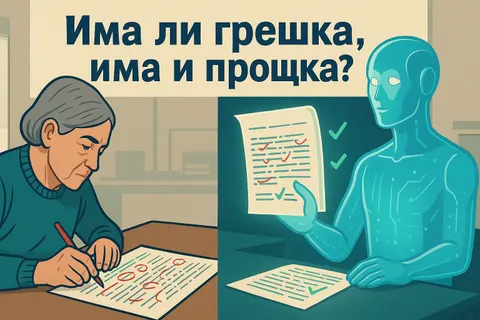
At a time when fewer and fewer media outlets, and even publishers, trust specialists to watch over spelling, could artificial intelligence (AI) turn out to be a useful assistant? It is time for a telling spelling experiment with some of the most powerful models around. We all (we hope) believe that online we are now judged by our spelling rather than our clothes, and since we communicate more and more through written text, the way we write reveals so much to the other person. Can AI help us write correctly?
 80
Test: Can You Tell an AI Voice from a Human One?
Six audio clips, each speaking a short phrase. Some were generated by AI, the others are real human voices. Can you tell them apart? Take part by August 15, 2025, and with six correct answers you enter the draw for a modest gift. Will you guess which voice belongs to a person and which to a machine? The gauntlet has been thrown!