
From The Floor to Quizza: Put Your Knowledge to the Test!
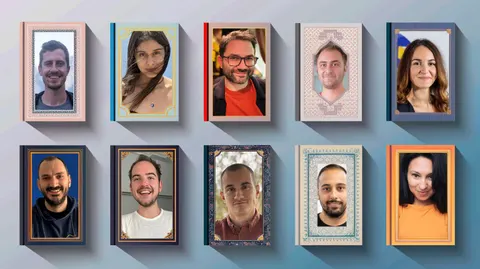
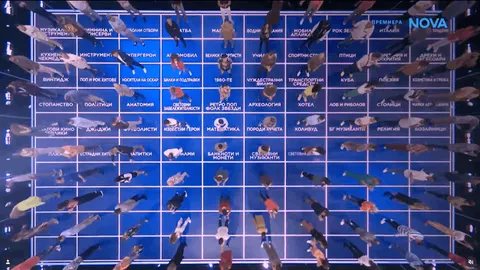
Let me introduce Quizza! A website we built as volunteers. Where you can challenge yourself by taking any of our many permanent quizzes on all sorts of topics. Where you can face off in a weekly contest against some of the heroes you know from online and offline competitions! And, last but not least, where you can discover causes that each of us stands behind with our own name! I have no doubt that last night you watched the first episode of The Floor, the new and innovative game show on NOVA, one of Bulgaria's main TV channels. If you didn't, it's not too late at all—there are still 12 whole episodes to come. It is a reason to celebrate in itself that a game about knowledge, not scandal, has made it to prime time, and I believe it will be the hit of the season. Rumor (and ChatGPT) has it that I'm in it too. But we're here for a slightly different digital story, one closely tied to the game. It comes to show us that when we are together, we are capable of miracles. That if people brought together supposedly to compete and beat one another can reach out a hand for something bigger, then our society can do it too. Do you like to provoke and test your knowledge? Are you looking for meaningful causes to help, knowing for sure that your help goes to the right place and supports something important and lasting? If your answer is “yes” to even one of these questions, then this Digital Story is just for you!
 42
How AI Painted 10 Classic Bulgarian Verses: 2022 vs. 2026
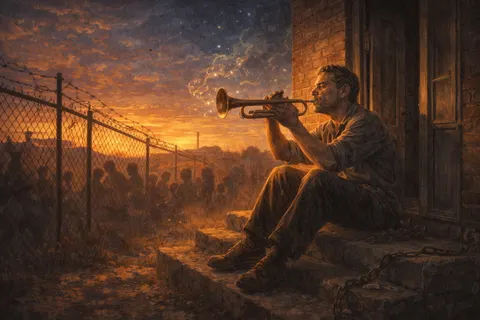
In 2022, I called on MidJourney, the first truly impressive AI image model, to carry out an unexpected task. I fed it 10 quotes from beloved Bulgarian poets to see what it would draw. The results were striking and thought-provoking, and it became one of the most read and discussed Digital Stories. Almost a whole five-year plan has gone by since then. What will the pictures drawn from the very same verses by today's most advanced models look like? AI will undoubtedly show more skill, but will it also show creativity, understanding? Will its illustrations come closer to art? Judge for yourselves… “Never in my life had I dared to hope for a compliment quite so kind: AI invited me—the newest AI—to its home for a glass of absinthe.”
 43
The Day Programmers Stopped Writing Code
In just one month, some of the undisputed authorities from different generations and corners of the computer world rallied behind the same idea. Today, humans no longer need to write computer code, because artificial intelligence already does it better than we do. This Digital Story matters not only to the tens of millions of programmers but also because it is a powerful example. It is unfolding in the software world, but there is no reason it won't repeat itself in every other field where AI is arriving more slowly, yet just as relentlessly. Maybe it's time to “get off” our keyboards. But… what do we take up then? What will programmers do when they no longer write code?
 44
Poet + AI = Apollo ex Machina: Meet the Winners
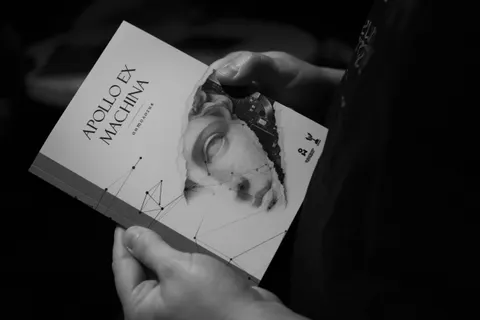
The time has come to announce the winners of Apollo ex Machina, Bulgaria's first (and one of the world's first) competition for poetry created with the help of artificial intelligence. The jury's picks were revealed at a ceremony in the Sofia City Library, where the anthology of selected entries, published by Scribens, was also presented. In a moment you can read the best poems and judge for yourself how good they are.
 45
Go: The Great Game
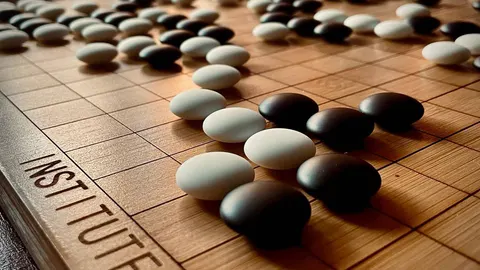
Two people stare stubbornly at rows of neatly arranged, round, flat stones. Just a game, you might say, but it is not that simple—not at all. This is not only one of the oldest games we know but also the most complex, and for a long time we considered it humanity’s last bastion, the place where technology could never overtake us. When it finally did, a remarkable new digital story was born.
 46
What Do Bulgarians Think About AI Today?
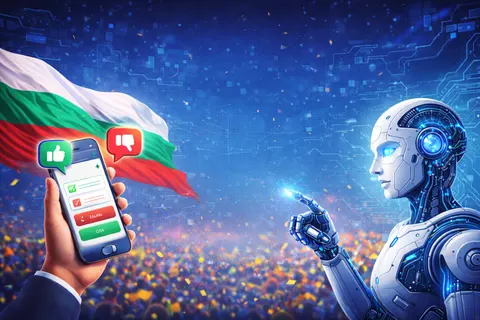
What do you think about artificial intelligence? Is it a danger or an opportunity? The future or the present? Marketing or a colossal breakthrough? In December I invited anyone willing to fill out a short but important survey, the same questions I asked a year and a half ago. Nearly 350 people took part this time, and now it is time to compare the two rounds, look for trends and sketch together today's landscape of how Bulgarians feel about the most discussed, most dizzying technology of our time.
 47
“Without a Little Madness, It Just Won't Work”
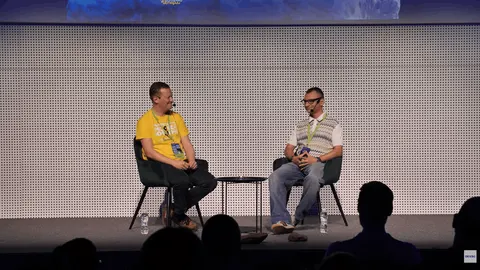
In this life you shouldn't, and can't, only take. If you don't give—in return or entirely for free—you have lived in vain, as the popular hit song goes. Even if we know it, it is worth reminding ourselves often. I hope this Digital Story reaches more people. I believe that if more people recognize its lessons, we are all capable of reclaiming the conversation and helping our country flourish. Of fulfilling the great dream of the protagonist and narrator here—that our children will WANT to stay in Bulgaria. Tenko Nikolov is not only one of Bulgaria's most successful tech entrepreneurs. He is a visionary who believes in the power of a close-knit team, shared values and a little “healthy” madness.
 48
Experiment: How Many People Will Click the Dangerous Link?
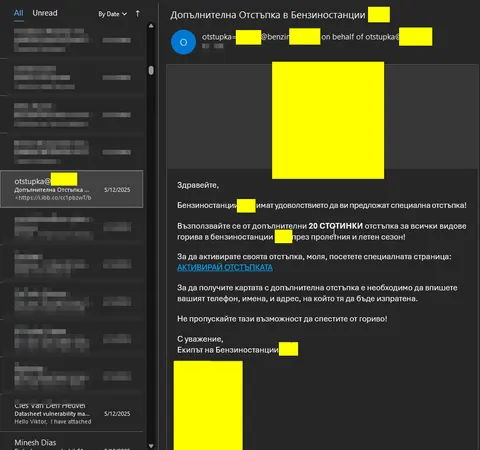
A very important and revealing experiment. Together with cybersecurity specialists, we send emails to 393 randomly chosen Bulgarian addresses. We simulate a cyberattack to see how many people will fall for it. And the results are astonishing…
 49
“A Complex and Difficult Year Lies Ahead”
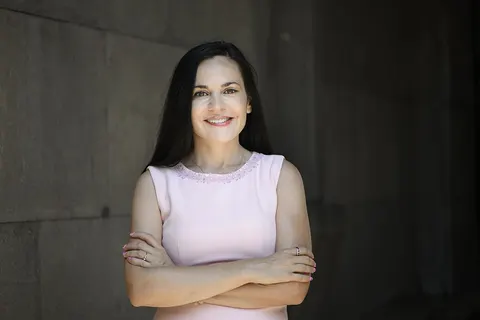
No, there's no astrology here, just pure science. How many scientists do you know who can predict the future with 85 percent accuracy? I know just one, and the verdict isn't only mine, but ChatGPT's too, from a particularly telling experiment. Assoc. Prof. Mariana Todorova returns for what has become a traditional Digital Stories interview at the start of each year. The futurologist always gives us important things to think about, so there's no need for a long introduction. Let's peek into the future together!
 50
Did We Get the Future Right? (An Experiment)
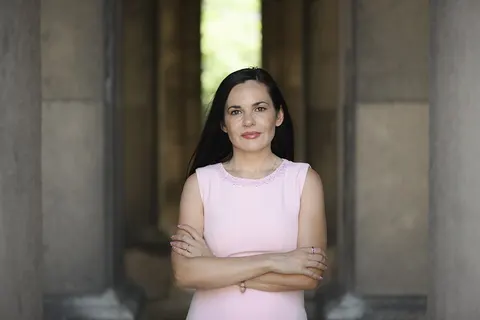
It is a Digital Stories tradition that every year begins with a visit from futurologist Assoc. Prof. Mariana Todorova. First, though, just hours after we rang in the new year, I have an especially interesting experiment for you. Have her predictions from our conversations so far come true, and to what extent? Can we check what has happened in the meantime, and whether it confirmed or refuted the futurologist’s words? How can we do it impartially? I will pick 20 specific quotes from the interviews and find an unemotional analyst to grade them. The results are astonishingly interesting!
 51
Slipping Out of the Net
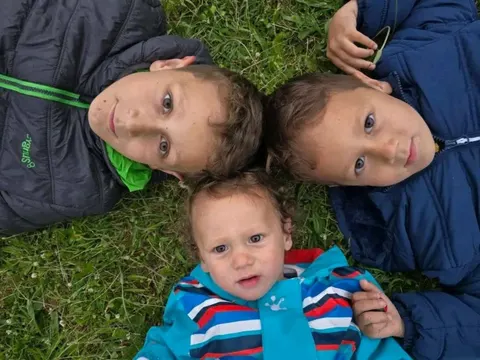
The internet keeps connecting us, and the internet keeps dividing us. But how many parts of our lives have we handed over to technology? This Christmas Digital Story follows a woman who found love online, built a family in England, and then decided to escape a society where everything happens on a screen.
 52
10+4 Things to Keep in Mind When Shopping Online This Christmas
E-commerce offers plenty of convenience, but it also comes with a number of dangers. On the eve of the holidays, I invited Viktor Rachev, a cybersecurity specialist at the specialized company SoCyber, to help us with practical advice on what to watch out for. Read it, think it over, and show it to your family and friends—it could well help you avoid an unpleasant mistake.
 53
How Henry Kissinger Foresaw the Future
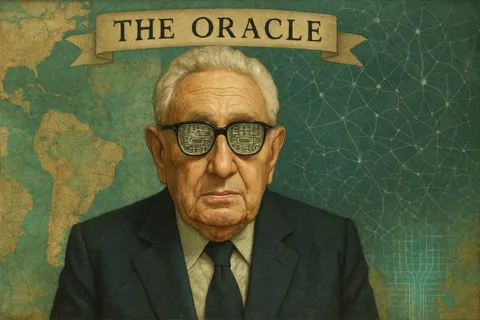
“There are two ways to make sense of the present situation. The first is by projecting from the familiar. Until now, the most transformative technologies created by humanity have served to refine or amplify our bodily capabilities. (…) Is AI simply one more extension of human capabilities? The second way of making sense of it assumes that this time the situation is different—that AI possesses unique qualities that cannot be reduced to an upgrade of human abilities. Within a few decades, through engineering, an analogue will be created of what evolution has been building over millennia—namely the human brain: the last organ left to be reproduced or reimagined inorganically.” We are not simply living in dynamic times in which we humans fail to keep up with technological progress. We have reached a moment when technology itself is making us start over. We have to redefine many of the concepts and systems that make up our lives—from democracy and capitalism to art and creativity. That's not me telling you this, but good old Henry Kissinger, who, on top of everything, is sending his messages about the future and artificial intelligence… from the beyond. The final work of one of the defining figures of the 20th century has recently come out in Bulgarian—the work of the man to whom we largely owe the fact that the Cold War stayed cold instead of turning into World War III. Genesis: Artificial Intelligence, Hope, and the Human Spirit gathers Kissinger's crucial views on the future we are already living in. Here are 14 of its highlights; may they finally spark the overdue public conversation about the future of humanity in the age of advanced technology and artificial intelligence.
 54
Look at That! When Seeing Becomes an Art
Seeing and recognizing are no longer an objective skill or a science. Neither technology nor people can prove to us, with enough certainty to matter, which work is human and which is not. So isn't it time we started treating looking, the search for truth and fact-checking… as an art?
 55
AI: Revolution or Marketing Hype? Your Opinion Matters! (Survey)
Is artificial intelligence unjustified media hype or the great force that will change our future as a species? Will it open incredible opportunities for people, or turn the world into a digital concentration camp? Your opinion is extremely important, and I will be grateful from the bottom of my heart if you share it in a short survey! Prizes await too: selected books! Responses are collected until December 31. You can choose which questions to answer. The survey is anonymous. Every response, every share is invaluable help in seeing how we relate today to the great technological subject of our time!
 56
Petko Dinev, the Man Who Gives NASA Its Eyes
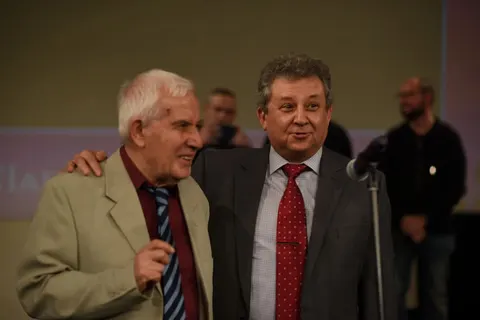
A Bulgarian and his team build the cameras that helped NASA turn its gaze to the Moon, and then to Mars. His designs are used by all the biggest aviation companies, and besides having already “set foot” on our satellite, they fly aboard thousands of satellites in orbit. In the 1990s Petko Dinev left for Florida, where he started working at NASA. He then founded his own company, which stands out worldwide for its expertise in building industrial cameras. His path began in Kazanlak—he is Bulgaria’s first gold medalist in physics and a student of the legendary Teodosiy Teodosiev, known as Teo. Our guest is also among the main characters of the new documentary Sotsialno silnite (The Socially Strong), which gives the floor to the gold medalists of Teo’s school. How does a person end up at NASA by chance? How does a scientist build a company that becomes the world benchmark in its industry? How can we change the fact that today half the students at the high school he graduated from fail to scrape even a pass on the math matura? How do we make science fashionable and give technology a chance? How do we, as human beings, catch up with its enormous growth? We have huge questions to discuss with this exceptional guest. “Yes, we live in interesting times. Maybe even too interesting. I don’t think we’ve reached the limits of technology. I think we’re still in the overture…”
 57
“If It’s Beautiful, Does It Matter That AI Wrote It?”
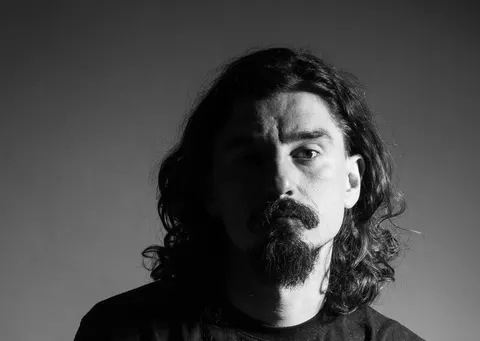
Is there room for poetry in the age of TikTok and artificial intelligence? How do we return this art to the pedestal it deserves? Can today’s poets be influencers, and should they? Is the time when artificial intelligence can no longer be separated from poetry frightening, or a dream come true? Apollo ex machina is the name of Bulgaria’s first competition for poetry created with the help of artificial intelligence, and now is the moment to join in! The venture’s special name was coined by today’s guest. Besides sitting on the competition jury, he runs the publishing house Scribens, which will publish the best poems from it in a collection. Georgi Gavrilov is a poet and… a physicist. He founded Scribens to give young Bulgarian authors a chance to reach their readers.
 58
Will There Be a Bulgarian Author? Book Picks from IT Leaders, Part III
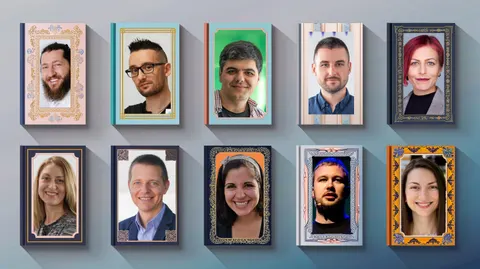
Would you have guessed that Bulgarian IT leaders read Harry Potter, or even Dostoevsky? I wouldn't have, at least until a week ago, when I asked them and it turned out they do. On the eve of the Day of the Buditeli, I invited 30 remarkable people to recommend three favorite books to the readers of Digital Stories, and today I present the second half of their answers.
 59
“Engineers Will Always Be in Demand. But Our Skills Have to Change”
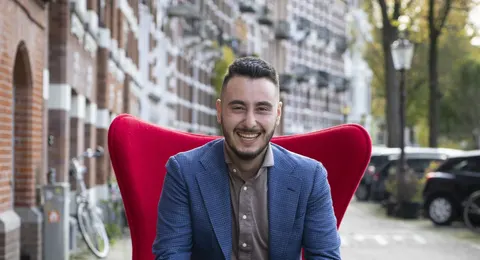
Work in the software world has already changed fundamentally with the arrival of artificial intelligence. On November 29, at the conf.ai workshop, Djemal Ahmedov will harness AI agents and make them work as an entire software team. Before that, we talk about the chaotic present and uncertain future of software in the age of advanced AI, and about whether there will always be a human in the loop.
 60
From Dostoevsky to Harry Potter: What Bulgaria's IT Leaders Read
I sent a short invitation to 30 IT figures I find remarkable: recommend three of your favorite books to the readers of Digital Stories. I tried to make the lineup of guests as varied as possible, from people in leadership roles to well-known speakers, from those working across the ocean to foreigners the industry has brought to Bulgaria, representing the widest range of technologies and different generations. Get ready for some stereotypes to blow up! I received no fewer than 20 replies, and I have the pleasure of presenting them to you! Once again they amazed me with their variety, their range and their depth, and they gave me plenty of ideas for future reads to add to my Goodreads list. Today I present the recommendations of the first ten guests; the rest will follow in a week. They aren't grouped by any particular logic—they simply turned out too varied and unexpected for that—so I offer them in the order I received them. Happy reading!