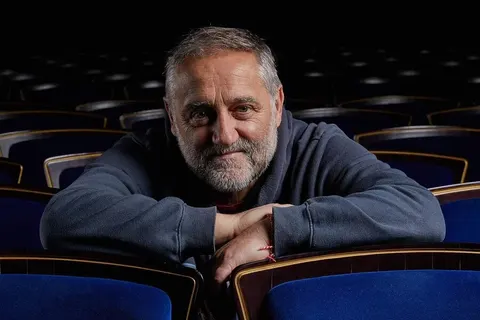

ChatGPT vs. the Champions: The Last One Wins!
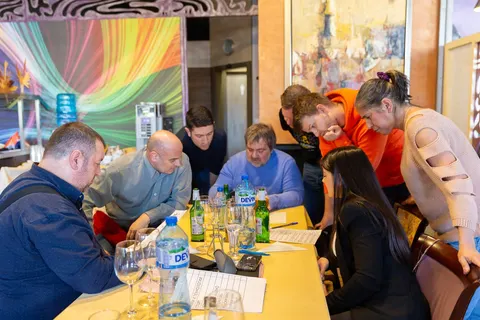
Do you know which place in Bulgaria had the highest average IQ on March 16, 2024, between noon and 6 p.m.? ChatGPT couldn't even guess. But I know the answer. No, it wasn't the National Assembly, Bulgaria's parliament. Eighty people had gathered in a restaurant in Plovdiv for an intellectual contest, many of them familiar to anyone who follows trivia, quizzes and television knowledge games. Split into 10 teams, they faced one another and, at the same time… the aforementioned ChatGPT. No fewer than 33 of them had won the show The Last One Wins on BNT 1 at least once (myself included). Almost all of the most popular contestants, with impressive tallies of victories, took part. The rest of the 80 who joined the club were contestants on the show and fans of quizzes as a format. What kind of unusual contest was this? Who turned out to be the big winner? What is the future of intellectual games in our battle (or encounter) with technology? Why would anyone today need to know and remember facts that are an arm's length away online?
 202
“The Point Is Not to Kill Our Own Creativity”
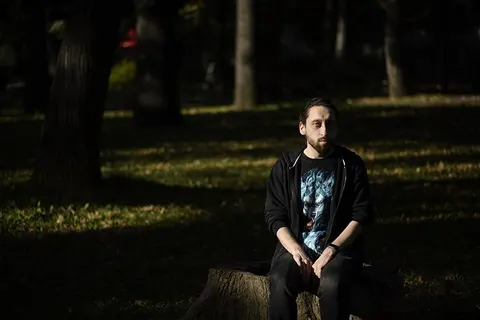
Is it still worth learning programming or data science, or is the future of software engineers doomed? Yordan Darakchiev, who is teaching Bulgaria's first one-year data science and AI module for the eighth time, talks about the challenges generative algorithms pose. His greatest hope is that we won't lose our curiosity and creativity, and he thinks mindless entertainment threatens them more than any AI ever could.
 203
Pavel Durov: The Better Zuckerberg
If there is Gandalf and Gandalf the White, why not Zuckerberg and Zuckerberg the White? Telegram founder Pavel Durov is a strange bird: a billionaire born in 1984 like the father of Facebook, but a Latin-speaking philologist and alleged hacker who built an app that promises security instead of manipulation. Two children, or none at all? What is his next big project, and does he fear artificial intelligence? Durov is one of those figures who make today’s tech world far more exciting…
 204
“The World Reeks of Kitsch. That’s Why It’s Heading for Catastrophe”
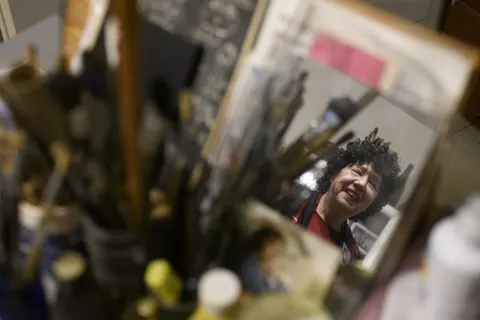
“People still have 10,000 ways to think and to look at the world. And what do they do, damn it? They stare at their phones. The children growing up now have never seen what’s around them. They are the subject of science fiction, living in a parallel world. They don’t know what the streets look like, what people look like. It makes me think there’s no hope. Who will bring them into this world? If it happens by chance, they’ll be shattered.” Tekla Aleksieva became a legendary illustrator after creating 120 covers for the Galaktika Library, Bulgaria’s cult science fiction series. Generations of readers link the greatest science fiction novels with the images she painted. Besides being an artist with a singular eye and countless accolades, she is also the author of a poetry collection. What does she think of images generated by artificial intelligence? Why does she believe we are surrounded by kitsch on every side—in literature, in art, in life? Can we get our good taste back, and how? Why must we never, under any circumstances, leave the Earth? And how is it that... Tekla Aleksieva never managed to finish the book behind one of her most famous covers?
 205
The Programmer Who Chose to Become a Babysitter
Programming, and a future in the much-vaunted IT sector, is as tempting as ever. Our guest today spent 20 years as a programmer, long before it became fashionable, until he realized he was tired of computers and happiest among children. So, defying every stereotype, Bogdan decided to earn his living as a babysitter.
 206
How Much Does Truth Still Matter to Us?
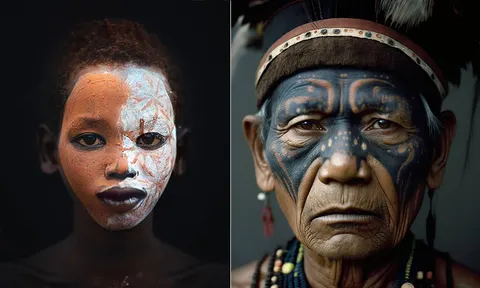
“How did we let the social contract slip away? Just like that, quietly…” We can no longer tell texts and images generated by artificial intelligence from those created by humans. That is the big takeaway from the Digital Stories experiment, in which nearly 2,000 people took part. We meet Nadya Shabani, a human rights lawyer and director of the Bulgarian Center for Not-for-Profit Law (BCNL), and Radina Banova-Stoeva, a human rights lawyer and legal consultant at the center, to ask how we will tell the truth from now on, whether attempts to regulate AI are doomed, and why the decisions we make about it today matter so much for the future of our civilization.
 207
Human or AI: Can We Still Tell Who Made It? (The Results)
Can we tell what was made by artificial intelligence from what was made by a human? Let me start with the short answer: we can’t. That is the main conclusion of the experiment held on the Digital Stories site, but there are so many other curious details that should make us stop and think… Did Hieronymus Bosch or Petko Slaveykov prove harder to recognize? Maria Zhekova’s dishes or Violeta Kuneva’s stanzas?
 208
“We Live in a Time of Total Transformation”
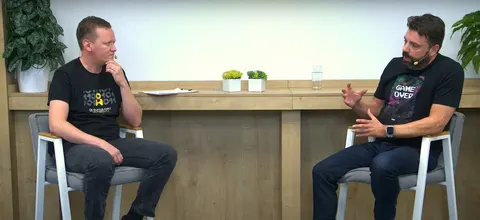
“We are surrounded by a huge number of software systems, we use them in our daily lives, and they were written by mediocre programmers. The way we create software is broken!” “The value of meaningful content will rise, because there is far too much garbage, far too much noise. The only way to preserve ourselves as human beings is to put up barriers. To sift what gets into our heads.” Boris Simandov has vast experience in technology. For nearly 10 years he held a director's position at Chaos Group, one of the most successful Bulgarian IT companies. Today he helps develop the next generation of startups. Together with Rosen Genchev, he created the Facebook group DevBG, the liveliest (and often rather strange) online space where people from the tech world meet. We talk about: – whether we can feel at ease in today's turbulent times – the artificial intelligence revolution we are living through, and the skeptics – the next important step: Sora and video generation – the big challenges and the professions doomed to disappear – the return of truth as a value, and the media of the future – the DevBG group as the best example of why and how democracy doesn't work today.
 209
What Should the Next Digital Story Be?
Can you think of a story that deserves to be told? Let me know, and if your idea becomes a piece here, you'll get a personal gift. Digital Stories turns three today! It's time to take stock of what has been achieved so far, time for you to have your say, and finally, time… for some unexpected news.
 210
“Let’s Hold On to Our Fear of Technology”
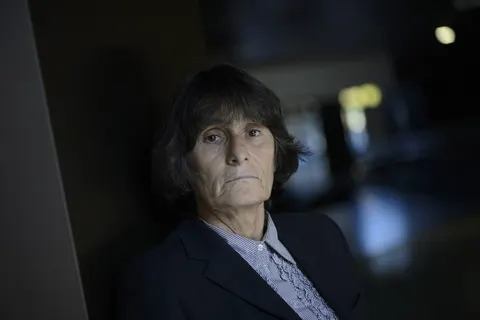
Zdravka Evtimova is among the strongest voices in Bulgarian literature of recent decades: translated into countless languages, honored with Bulgaria’s most prestigious awards and unquestioned acclaim abroad, her work is taught in schools in the United States and Denmark. We talk late on a Saturday evening about technology and people, she impresses me once again with her subtle wisdom… and then, for the first time in all my years of interviewing, the recording simply vanishes—so we talk again on an even later Sunday evening, after the “almost-the-last” train from Sofia has been delayed and she is home once more. Where will the locomotive of words take us?
 211
Human or AI: Can You Tell Who Made It?
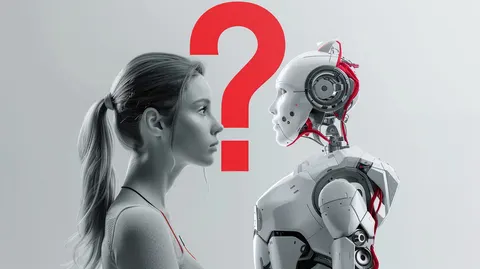
Can we still tell what a human has created from what artificial intelligence has generated? Let's run an experiment together that may yield some very interesting answers. Thirty quick questions, about 5 minutes is enough. All you have to do is decide which of the images and texts were generated by AI and which were made by people. Join in and give it a try! Invite your friends too! The more people take part, the more interesting the results will be! Responses will be collected for two weeks, until March 8, 2024. Five participants will receive a gift.
 212
Can Algorithms Make Art? 15 Viewpoints That Matter
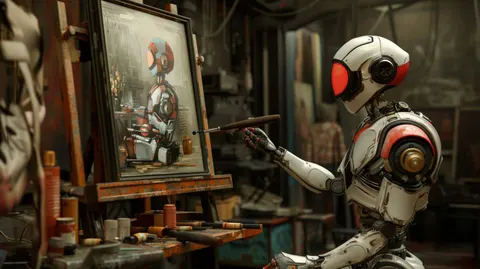
Can algorithms create? Is artificial intelligence a tool or an author? Could AI give birth to the arts of the future, or has creating already become a pointless pursuit? What will we do when its works in every field become indistinguishable from ours? For three years now, I have been collecting viewpoints on this site about the big questions of today's technological day. I believe it is vital to bring more and different voices into the discussions on important topics, and art and creativity is unquestionably one of them. Here are 15 of the most interesting and substantial opinions I have gathered in that time. Do the words of tech people, writers, artists, clergymen and… tomcats contradict each other, or do they complement one another?
 213
How to Generate Yourself an Influencer
How could you not like Elena Dimitrova, or simply EcoElena? Blonde, smiling, upbeat, she travels, lives in harmony with nature, hands out useful tips and offers exotic recipes. There is just one more detail: she doesn't exist, and in a month of posts in her name, 84,519 people saw her, nine proposed romance, and not one noticed that every letter and pixel was generated by AI.
 214
Dr. Fiziev, the Man Teaching AI to Read Our Genes
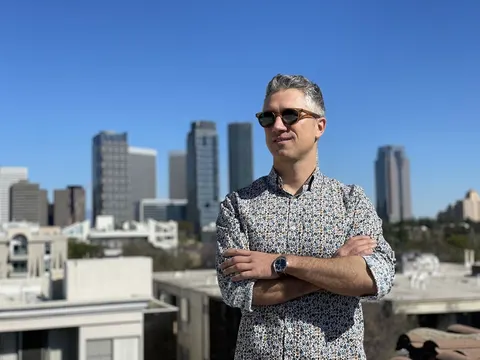
“The combination of genetics and artificial intelligence is extremely powerful, and I expect big news in the coming years,” says Dr. Fiziev. Why is it so hard to tell which of our genes are to blame for a given problem, what do we gain now that anyone can read their own genome, and did we overestimate heredity as the main factor in whether we stay healthy? Dr. Petko Fiziev, a bioinformatics specialist who leads an AI team at Illumina in the heart of Silicon Valley, also talks about the future of gene editing and “designer babies.”
 215
Tetris: The Human Who Never Stops Outdoing Himself
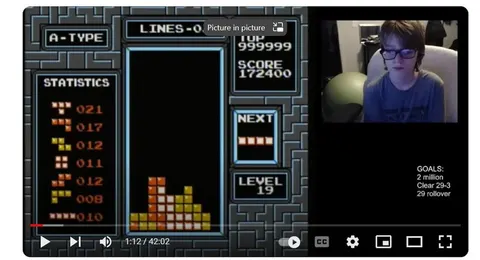
“I’m going to pass out, I can’t feel my hands…” Blue Scuti mutters, before he realizes he has fulfilled a dream that seemed impossible. Almost four decades on, he has beaten, one way or another, the game we have all played. Sitting in front of a retro cathode-ray-tube TV, found after countless difficulties, clicking the buttons of a retro controller for 42 minutes straight at more than 20 taps per second… the teenager reminded us that there is no limit to what a human can do. But how can you beat a game that has no end? And why are this success and the road to it such important news for humans as a species? News about our ability, through cooperation and talent, to keep moving forward… To create, to make things, to find meaning. To give birth to stories. Tetris is a legend that passes through the generations to give birth to new legends. A week ago we took a stroll through the history of the game that came out of a Soviet laboratory during the Cold War. Today we will look at a brand-new record that has so much to tell us about ourselves.
 216
“All the Stories Have Been Told. But How Will the Words Tremble?”
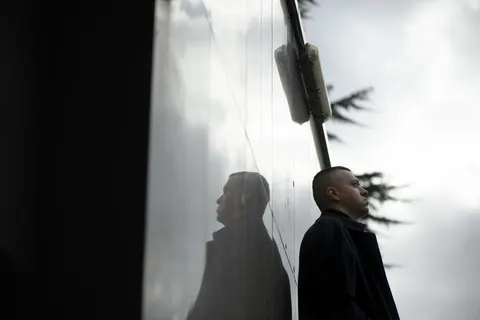
A director, rapper and podcaster meets a journalist, programmer and writer. A conversation with the roles of host and guest swapped… and although there are only two of us (plus, of course, one more wonderful podcaster), it turned out that these combinations of three callings apiece hold some interesting nuances. The podcast 2&200 is a classic of the genre and shows why this form of conversation is turning eyes and ears back toward shared words. We continue the conversation for admirers of Kusturica and/or Dostoevsky and/or Marx with Orlin Milchev, once known as MC ATILA, a man able to pierce with words and questions. He is also a director, and last year saw the release of his debut feature film, The Art of Falling. A guest with an unexpected view of the big issues of today, interwoven with technology. The “Scourge of God” has long ceased to be a single hero; it is what we have created online. But what is looming ahead?
 217
Tetris: The Soviet Game That Has Been Making Legends for 40 Years
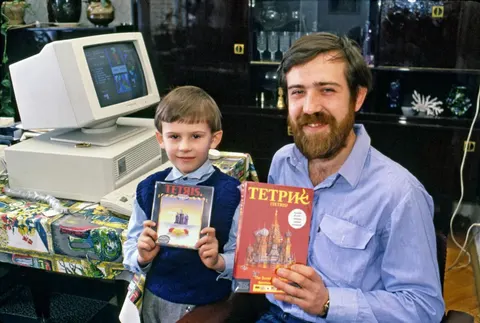
Almost 40 years on, the original Tetris has finally been beaten! The triumph of a likable 13-year-old kid turned all eyes back to the good old classic contest from the days when computer games were a perfect feast for the senses, and to the story of how the game everyone knows was born and became a legend, with its fascinating sides and its dark secrets.
 218
Is There Still Such a Thing as a Foreign Language?
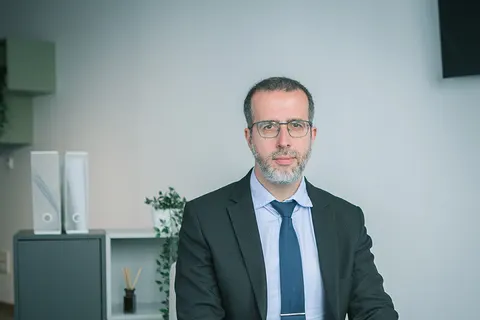
Is there any point in learning foreign languages? Machine translation has developed astonishingly fast, and today it captures much of what needs to appear in another language… Have we reached the limit, and what comes next? Kaloyan Kirilov, a translator and interpreter with nearly two decades of experience, on the art of translation in the age of advanced artificial intelligence—and on whether we can teach an algorithm to curse convincingly enough to sound like a native speaker.
 219
A Dome You'd Want to Move Into…
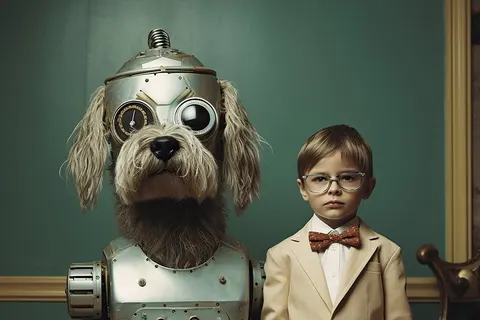
Look at them: so real… and at the same time so fantastical. You feel like diving into the world of the Dome, which both resembles ours and is completely different. Better or worse?
 220
“Information Was Freedom. Now It Is an Instrument of Slavery”
Today’s guest will never have artificial intelligence for competition, because he is not only a virtuoso of words but a mind so unconventional that it cannot be imitated. Alexander Sekulov, a playwright, poet, prose writer, journalist and founder of two music clubs in Plovdiv, talks about words as weapons, revolutions in digital times, spiritual laziness, intelligent humor and information emissions.