
Rakia-Flavored Chips: An Optimistic Theory of AI and Art
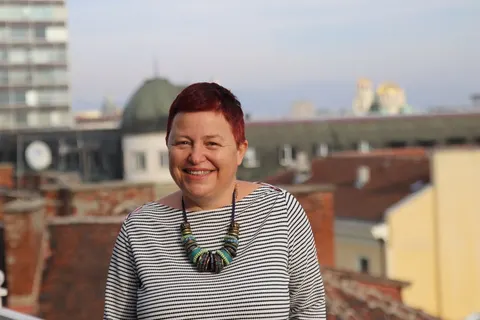
Have you ever seen chips that taste like tripe soup or rakia? Or a Lego set that builds the Alexander Nevsky Cathedral or an old Zhiguli? Can you picture Bulgarian celebrities in Mortal Kombat—Sancho the Sandman versus Danov, and Khan Kubrat versus Gala? Well, no need to stretch your imagination: all of these ideas come to life thanks to the impressive collaboration between today's guest and the algorithms. Rosen Dukov is a graphic designer with a remarkable track record. He has created the posters for some of the most popular Bulgarian films of recent years and designed covers for books that sit in every self-respecting library. He has won international Photoshop competitions several times, and it is no exaggeration to call him a world champion. In recent years he has been teaching these skills at SoftUni—design, photo editing and artificial intelligence. Why isn't a visual artist afraid of competing with artificial intelligence? Why does he think it is important to get to know the new possibilities algorithms give us as soon as possible? What are the next original ideas he will use to show us how far generative models have come?
 182
Digital Stories Wins a Prestigious Award… for Storytelling
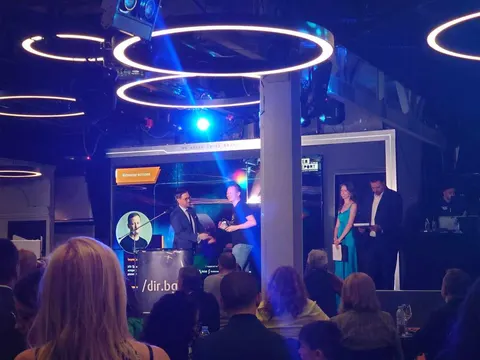
For the fifth time, Digital Stories is among the big winners of Bulgaria’s most hotly contested and well-established journalism competition, the Web Report awards, organized for the seventh year running by the news portal Dir.bg. The honor means a great deal because of the respected jury and the stiff competition: 230 pieces of journalism were entered. Digital Stories has been among the winners every single year since the project began, and this year the award comes in the True Stories category for “Jesus: The Programmer Who Came Out of the Ghetto,” while a second piece, “How to Generate Yourself an Influencer,” was one of the three nominees in the Technology and Innovation category.
 183
Trust, but Verify Online!
If you have never heard of “social engineering,” or “social engineerism,” as today’s guest says we ought to call it, you are probably picturing a plot straight out of Frankenstein: the engineer builds himself a person… Or something from the conspiracy theories about mass mind control. Whether you have heard of it or not, though, we need to talk about it more and more. Because this is the most dangerous and most effective attack in the digital world. One that targets not computers, networks, servers or programs, but the weakest link in the chain: the human being. “Today cybersecurity breaches happen more and more often through social engineering, a method that uses manipulation and manipulative techniques so that people are deceived and access to sensitive information is gained,” says cybersecurity specialist Plamen Tsvetanov. But what are the most important steps to protect ourselves? What are the biggest risks of underestimating the person on the other side? Why should trust online be a scarce commodity? The subject matters to everyone, even those who don’t realize it…
 184
Radio-TV-Gramophone: 5 Unexpected Bulgarian Technologies
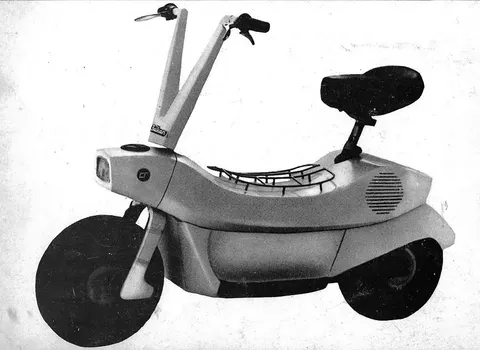
Did you know that the mains voltage in Bulgaria wasn’t always 220 volts? Or that a fascinating Bulgarian computer game from the early ’80s turned into… a prophecy with its very title? What did the first Bulgarian electric scooters look like? And could the “hipsters of the ’60s” who rode them also get themselves a radio-TV-gramophone… provided they could carry 120 kilograms on their shoulder? Once again we set off through the colorful history of Bulgarian technology with the most precise and captivating guide. For 15 years now, Anton Orush has been gathering a sea of information (and exhibits) about its past and present. His incredible life, worthy of a novel, was one of the first digital stories. So here we go, boarding the time machine for 5 stops back in history: 5 fascinating stories from the past of technology in our lands.
 185
“With Today’s Newspeak, We Are Walking Evolution Backwards”
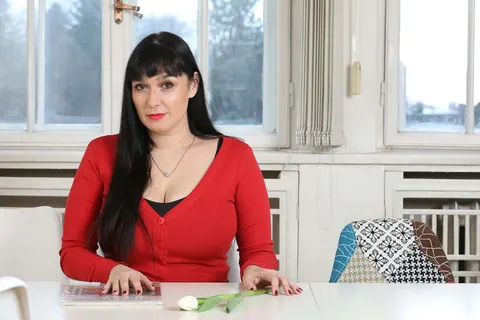
“We are making our language poorer and poorer. Online we communicate in short, simplified sentences and use an awful lot of abbreviations. This newspeak is a way of simplifying how we think and squeezing ourselves into a mold. Voluntarily, imperceptibly, step by step, without realizing what we are doing, we are drastically narrowing our view of the world…” Today we use ever simpler speech in our daily lives, foreign borrowings easily push out beautiful Bulgarian words, and artificial intelligence handles the spelling of our native language better than most people on social media. Instead of rich Bulgarian, we massively speak and write a crippled newspeak, and the reversed evolution of our language is increasingly visible in our children. Many of them cannot tell a story or describe something, and they do not know Bulgarian, even in the upper grades. How can language divide us today instead of bringing us together? Holidays also come so that we can touch on important topics and talk about the big problems we otherwise have no time for in the bustle of everyday news. That is exactly what we will do with today’s guest. Doroteya Nikolova teaches Bulgarian language and literature. She has worked in journalism as a political reporter and in PR. She takes part in many joint initiatives with the literacy platform Kak se pishe? (How Do You Spell It?), among them the Words of the Year campaign and the new venture, Life Has No “aUtocorrect.”
 186
“Leading by Example Is a Fearsome Weapon”
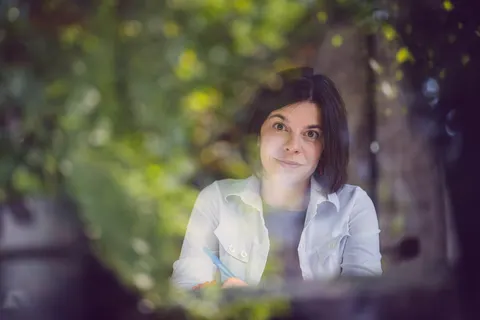
“Calling the inexplicable a ‘miracle’ is a beautiful way of admitting how little we know,” says today’s guest. “Miracles are also a chance to stop fooling ourselves that everything depends on us alone, to catch our breath and learn to trust life.” Ivanka Mogilska is a copywriter with 20 years of experience, the last 15 of them freelance. She is a blogger, editor and teacher. She is the author of seven books, the latest of which is the collection Obiknoveni chudesa (Ordinary Miracles). But… do such things really exist? We will ask her in a moment. Her airy, wise stories hold the everyday miracle, which, in my view, is the very reason to keep going. We will talk about digital and analog miracles. About the miracles worth teaching artificial intelligence and the ones it may someday create. About brevity and the long texts that carry meaning. About the need, every now and then, to “get off the merry-go-round”…
 187
How Did We Break the Conversation Online?
Never before have we been able to talk about the things that matter, hear the smartest people and debate them the way we can online today, and yet… we spend our time looking for something to fight about. Here is a small experiment, garnished with eight things to think about, that follows a single article about covid on its journey through social media. A reflection on where we have ended up.
 188
“AI Is Arriving on a Massive Scale, Turbulently and a Little Chaotically”
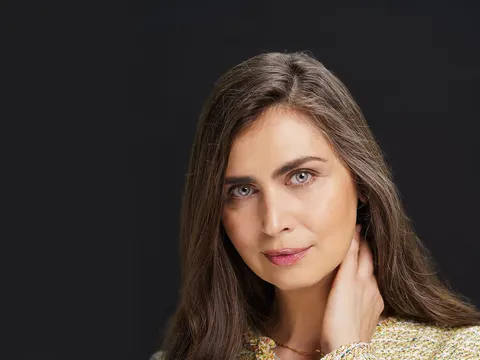
Bulgaria will soon host the first International Olympiad in Artificial Intelligence, bringing talented young people from at least 30 countries to Burgas. Elena Marinova, co-founder and longtime president of Musala Soft and co-founder of the olympiad, explains how the idea was born here. She also discusses what AI promises to change and why we urgently need a public conversation about it.
 189
The Wanderer Who Toppled a Government (Without Meaning To)
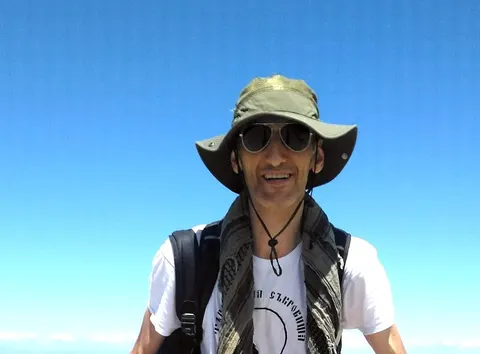
Can we change the world around us—our country, the world—simply by writing online about what moves us? We can, and here is the strongest proof I have ever come across. Meet Chergar, the legendary anonymous blogger whose satirical mystifications became part of Bulgaria's digital folklore, and one of whose texts ended up, entirely against his intentions, bringing down the Bulgarian government.
 190
“Truly Intelligent AI? Only If We Take the Next Big Step”
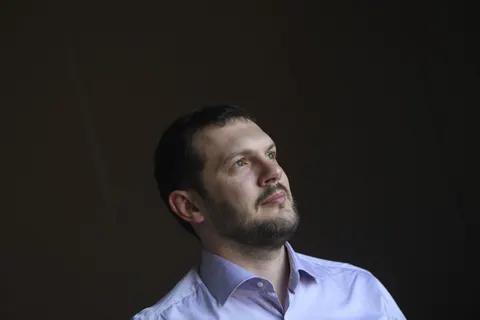
Viktor Botev and his team are building a successful product in one of the most high-tech fields of artificial intelligence, yet his enthusiasm for the near future in which AI will change us all is far from the sweeping expectations of the day. For eight years he has been chief technology officer of Iris.ai, a Norwegian-Bulgarian startup that applies AI to vast bodies of scientific data. A long, human conversation about technology for connoisseurs: hallucinations, the limits of large language models, and why the era of Bulgaria's outsourcing companies is over.
 191
Elections + Artificial Intelligence: The Perfect Storm
This year nearly two-thirds of the planet will vote, one way or another, for those who will govern them, and for the first time it is happening in the age after ChatGPT. Can artificial intelligence become the deciding factor, can we avoid being manipulated, and could technology one day change how our societies are run? Here are eight reasons to stop and think.
 192
“AI Has Already Changed the Translator’s Job”
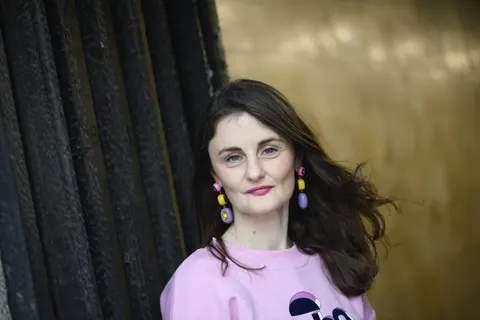
Did you know that automated translation systems are at work all around us? That a huge share of administrative and commercial texts are translated into every language by artificial intelligence, and the job of humans is to check and correct them? They are no longer even called “translators” but “post-editors.” Rada Gankova returns to talk about her main work, translation, and how artificial intelligence is changing it.
 193
Stack Overflow: The Programmers' Savior Is Fading
It is easy to tell someone who has ever programmed from everyone else: if you have “touched” code, you have seen Stack Overflow. In just 15 years, the question-and-answer site fundamentally changed the way programmers work, but today the legend is heading toward its sunset, ironically because of the technological progress it helped make possible.
 194
“Anyone Can Be a Programmer. It’s Time More of Us Were Engineers!”
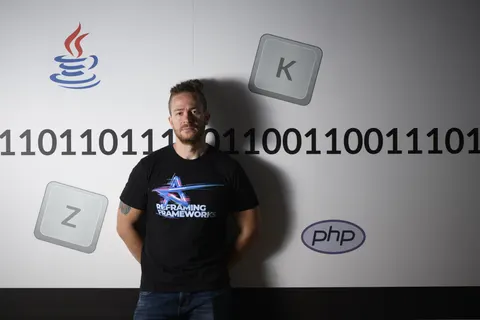
Ivaylo Kenov is an inspiring teacher who has helped countless people become programmers, a shy man who stumbled into the profession after realizing civil engineering wasn’t for him. After years at the head of SoftUni’s development team, he now leads a company with an ambitious goal: to remind the industry that building software should be an engineering process, not just coding. We talk about whether anyone really can become a programmer, why finding a first job feels so hard, and how the engineering approach got him from a doctor’s warning that he might never walk to 150-kilogram deadlifts.
 195
How DALL·E “Read” Beloved Bulgarian Books
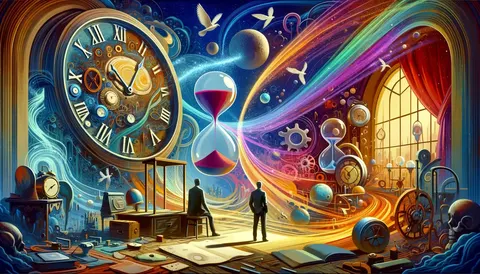
The Chukchi is no reader, he’s a writer, as the old Soviet joke goes. But what about ChatGPT? Time for another fascinating experiment to show what today’s algorithms can do, both at creating images and at understanding context. I will ask DALL·E 3, part of the paid version of ChatGPT, to illustrate classic works of Bulgarian literature from different periods. Why is this interesting? It will show how well the large language model works in Bulgarian and how far it recognizes some of our undisputed classics. And, not least, because… might it show us some unexpected, different, striking points of view? Could we speak of some form of collective unconscious? Will the pictures overlap, at least in part, with the images each of us carries in our head for these books?
 196
“I Imagine the Future as a Battle for the Invisible”
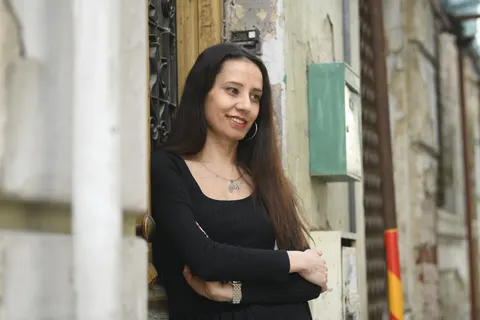
“For now, artificial intelligence strikes us as funny. It looks like a funhouse mirror, or a little dimwit we guide along, one who makes us feel knowledgeable and more human than ever. But this is changing literally by the day, and soon it will become a realistic and credible reflection of us. I think about that moment—perhaps then we will manage to see ourselves through its eyes, to grasp which parts of us are clear even to an artificial creature, what remains out of its reach, and what is most precious. To me, those are the places it cannot peer into. I imagine the future as a battle for the invisible; that will be the most important resource. What artificial intelligence cannot register is the most precious thing in us.” Pochti vsichko e nared (Almost Everything Is Fine) is the title of poet Violeta Kuneva’s debut collection, and it captures with such precision how the world feels to us today. But how did it come to this, that we can no longer tell the poet from the algorithm? What do we lose if that is so? Is the problem that, en masse, we have lost our yardstick for art, for metaphor, for layered, living texts that are human by definition, as poems are? Will poetry come to an end, or… is it precisely poetry that can save us from ourselves?
 197
Buying Eternal Youth
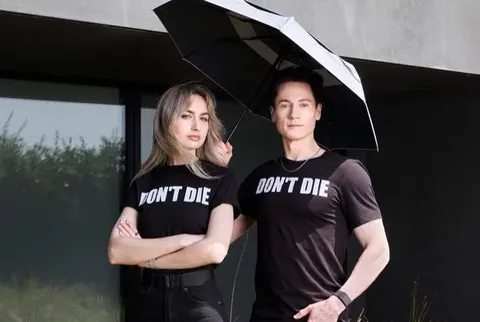
Forty-six-year-old Bryan Johnson has already spent more than $4 million to make his body work like an 18-year-old's. He claims it is working. He puts everything into it, going as far as infusing himself with blood plasma from his own son. He believes he is the most measured human being who has ever lived, and that his experiment will change the life of everyone who wants to live long. In other words, everyone. Dream or utopia? An obscene waste of money or an idea that could change our evolution? Genius or sheer madness?
 198
“We Bulgarians Have the Mindset to Be Successful Entrepreneurs”
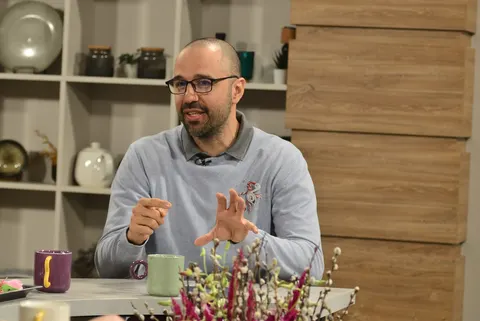
Boris Paskalev is an entrepreneur with impressive experience in the startup world. He recently became a strategic advisor to INSAIT, Sofia's Institute for Computer Science, Artificial Intelligence and Technology, one more guarantee that we can expect ever more remarkable news from there. A former youth national basketball player, he went on to study at MIT, then helped found DeepCode, a pioneering AI coding startup acquired by Snyk in 2020. We talk about his path through Silicon Valley, the AI revolution, the coming revolution in robotics, and how Bulgaria can have more successful startups.
 199
The AI Detective: Can Technology Give Us Back the Truth?
After a Digital Stories experiment with almost 2,000 participants showed that we can no longer tell AI-generated images and texts from real ones, it is time for the next step: could artificial intelligence itself become our salvation in this unequal battle for the truth? Radostin Cholakov, from the Rhodope village of Barutin, and his friend Delyan Boychev, both finishing high school this year and both already accomplished in the world of neural networks and computer vision, decided to find out. AI creates remarkable images today, but can it tell truth from lies and judge which picture was made by a human and which by an algorithm?
 200
“We Have Yet to Learn How to Be Bored Well”
“The big question is how society will transform. Because we can see that right now things are not happening the way they should. Even capitalism is in its twilight, close to its end. We don’t know what comes next or what it will look like, but it certainly won’t be driven so much by the huge businesses that are finding it harder and harder to exist.” Justine Toms has rich and varied experience in the internet era—in communications, digital marketing, design and entrepreneurship. She teaches at New Bulgarian University and SoftUni Digital. She organizes the Site of the Year awards, and her personal blog has been running for almost two decades. With the eye of a scholar, a practitioner and a teacher, she follows how communication online is changing and where technology is taking us. How can we be sure today that we are not missing something important in the flood of information? Or that we are not falling victim to manipulation? What will the new media look like after… “the death of the media”? Will they manage the task of helping us find our bearings? In a world that is doomed to face a sweeping transformation in the years ahead…