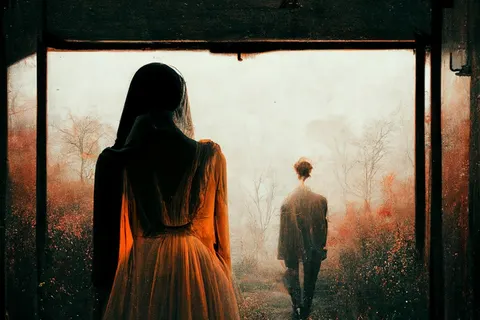

These Days Even Love Happens Fast. But Slow Love Is More Beautiful…
Where does magic hide today, will we ever lose the power of the word, and should artificial intelligence learn about us from books like The Brothers Karamazov? Nikolay Terziyski is a young writer who offers his own deep, contemporary take on eternal themes, a master of words with a magical eye whose style is linked to magical realism, and for good reason. Do we all have stars under our eyelids?…
 342
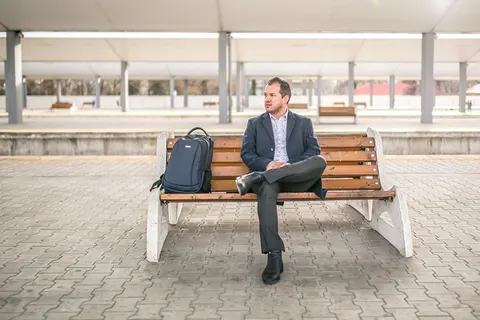
“The Saddest Thing Is When a Talented Child Gives Up”
Children and computers: how do we make that meeting go as well as it possibly can? Elitsa Tsoneva worked as a journalist before moving into information technology, spent 15 years in the field, and then, quite unexpectedly and without any plan, became a teacher. Why does education never become a priority in Bulgaria, how does a teacher win students’ attention, and how do we spark the curiosity that makes a child truly learn and grow?
 343
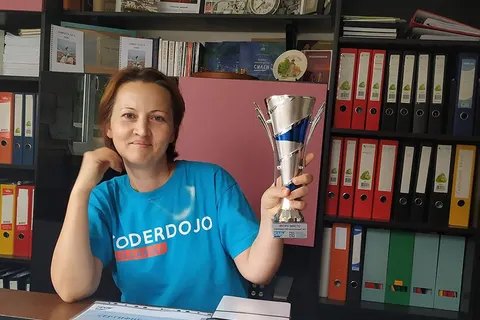
Santa Claus on the Kaval
What does it mean to be an eccentric today? Can fate smile on you when you swim against the current and the stereotypes? This digital story is about two people separated by several generations and united by their love of Bulgaria and its folklore: one eccentric who left a corporate career to devote himself to his beloved art tells us about the last years of another, a man who held dozens of characters inside him—musician, instrument maker, sage, priest and… even Santa Claus. Bogdan Darev directed the film Kaval Park, where for almost two hours he presents the surreal figure of Alexander Eppler, an American of Russian descent and a Bulgarian at heart.
 344
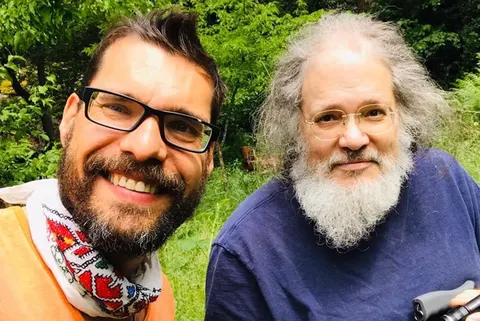
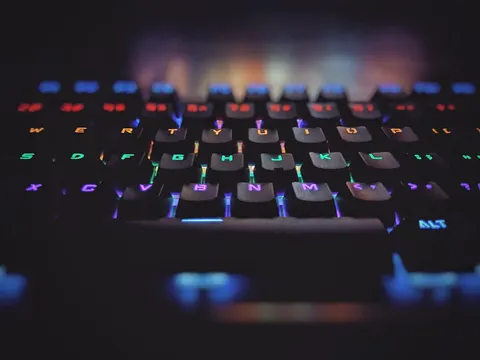
So You Want to Be a Programmer?
Is programming for you, and is it worth trying, how late is too late, which language should you pick, and how do you land that first job? I decided to become a programmer at 33, after years in another profession, and here I have gathered everything I wish someone had told me back then.
 345
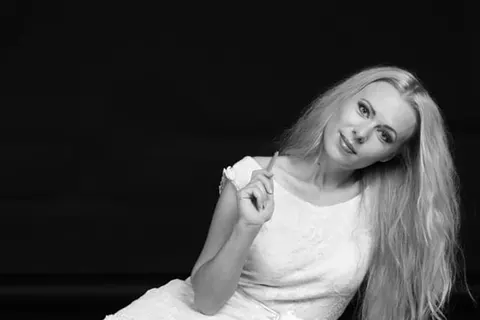
“The More Technologically Advanced We Are, the More Terrible the Mistakes We Forget”
Lyudmila Filipova is among the most widely read Bulgarian authors of recent years. Her novels span an enormous range of subjects, and she never stops seeking new literary challenges: the distant past of the people who lived in these lands, the challenges they face today, the great riddles life sets before us. After such a colorful palette of interests, it is time for her digital stories. We turn first to the past in order to look toward the future. And finally, most importantly, we dream of the moment when people will once again be stirred not by the news of the day, but by the stars…
 346
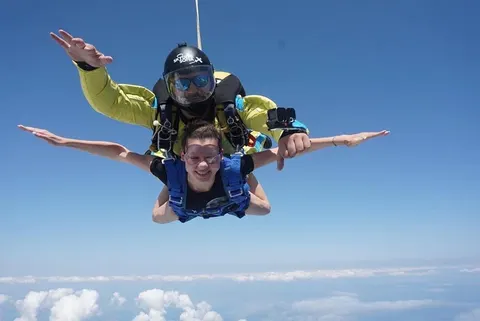
Fly, Tanya, Fly!
Think the internet can't launch you into space? It can, though it still depends mostly on you. Have you heard of Tatyana Ivanova, who dreams of becoming (and, I'm sure, will become) the first Bulgarian woman cosmonaut? If not, it's time to meet this radiant, charismatic girl reaching for the stars, and even if you know her, stay a while to talk about the next big step on the road to her dream…
 347
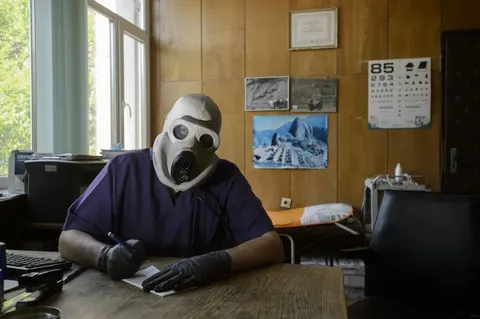
“Dr. Google Can Be Deadlier Than Dr. Mengele”
Is technology creating a new human species? Why do we Bulgarians keep dying at record rates, and can that change? How do we learn to look after our own health before it is too late? Why can Dr. Google sometimes turn out to be even deadlier than Dr. Mengele? Dr. Slavyan Stoilov is a remarkable doctor and a highly unconventional man. As the physician on countless Alpine and other far-flung expeditions, he is responsible for the lives and health of his companions, sometimes in extreme conditions. As he puts it himself, he has occasionally had to treat a tooth with pliers and a hammer. The rest of the time he is a general practitioner, and lines snake outside his office in a shabby outpatient clinic in the capital, Sofia. Dr. Stoilov studies ancient medical systems and is a fourth-generation doctor. Even so, he has a distinctive view of technology, about which he is far from always enthusiastic.
 348
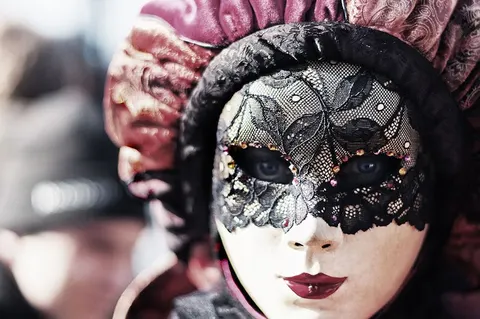
Anonymous or Troll: Who Is Hiding Behind the Profile?
Who are you? The person behind that supposedly authentic profile across from me? First we were anonymous by default, then it became the norm to put our real names behind the hate we spew on social media. Is anonymity freedom, or does freedom come when you always know who is on the other side, and where is the line heading next?
 349
“Literature Can Still Save Us from the Future”
Nikolay Genov is a lecturer, a PhD in literary theory and a chief assistant professor at the Institute for Literature of the Bulgarian Academy of Sciences. A young man who loves books and dreams of lighting the flame of that love in more young people. Is the end of literature approaching, what does science fiction have to tell us today, and what should Mark Zuckerberg learn from the wise Stanisław Lem while building his notorious metaverse?
 350
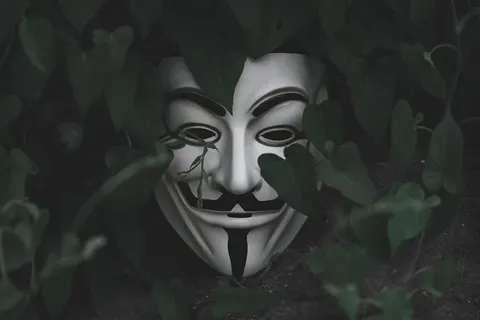
Guy Fawkes, the Face of Anonymous
You have seen this face many times. It is the great symbol of the 21st century. It comes from deep within Britain’s past, yet it would never have become the archetype we know today without a pure accident that came from art. Who was this Guy Fawkes? How did a mythical figure from Britain’s distant past come back to life to carry so much symbolism? How did his name become a word used every day in English? And is he really someone who deserves to be held up as an example?
 351
“Let’s Wake Up from the Dream That We Are Someone’s Victims”
“How do we restore the value of words? By no longer hurling them at each other. Just because we click on different links doesn’t mean we can’t talk and listen to each other now and then.” Only we Bulgarians have May 24 and November 1: the day of the letters and the day of the people who turn them into a creative force. Ivan Landzhev is first and foremost a poet, though he heads the creative team at an advertising agency. He is one of the few who truly love words and, rarer still, words love him back. We talk about the awakeners and those who wake us, about words and deeds, about the awakeners, the wide-awake and the fools, about hope, and about the magic of language in the digital world and the meaning we will lose if we forget it.
 352
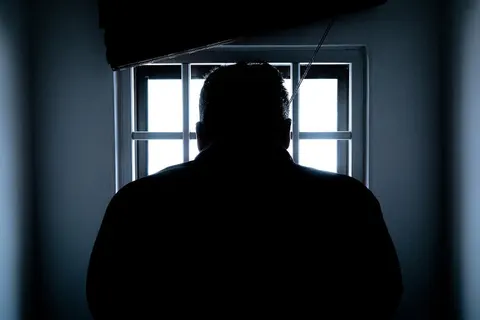
A Future Without Crime, or a Digital Concentration Camp?
Algorithms, it turns out, can already predict when and where a crime will happen. Countless lives could be saved this way. Humanity could be forced to bid farewell to that age-old dark side of its own—crime. And what about the justice system? In China, some verdicts are already officially decided by artificial intelligence, and its rulings are challenged only when there is serious evidence. Does this mean the end of judicial errors, legal tricks, the imperfections of the field? Will we put John Grisham out of work? Or will we end up in the terrible final scene of a famous novel—a man and a woman are talking when a steely voice behind them says, “You are the dead”? If every crime can be predicted or justly punished, will our lives become incredibly peaceful? Or will we find ourselves in an over-controlled global concentration camp?
 353
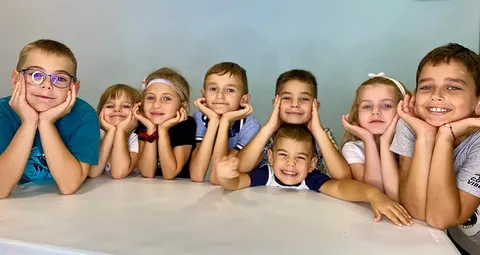
Podkrepi.bg: Can We Work Miracles Together?
What happens when 1,000 volunteers, most of them from the world of information technology, roll up their sleeves to build something that could change our society? I’ll let you in on it: the result of this experiment is positive, and it lays the foundations of a platform that can literally save lives. This digital story is meaningful, and it shows that when different people join forces, backed by a dose of typical Bulgarian stubbornness, they can work real miracles.
 354
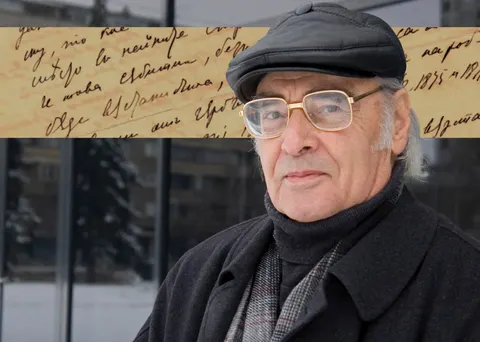
“We Are Simply Not Wise…”
A fateful 13 years have passed since this interview with Anton Donchev, and his words sound even more urgent now. Today the writer passed away at the age of 92. “What will the world look like in a century? We know nothing—whether all this horror now unfolding won’t give rise to a new branch of science. Whether some microbe won’t pop up… The thing is, humanity today lacks the art of synthesis.” “People feel there is no justice. The great loss of these last 20 years is the confusion about the place of the spiritual and the material in the life of the individual and of society.”
 355
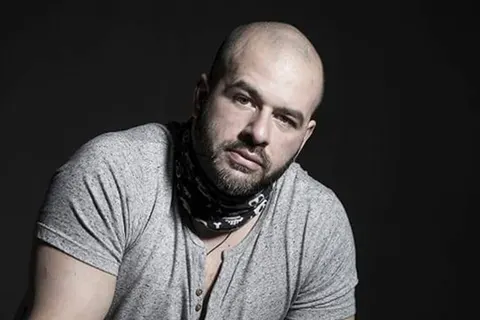
Stefan: Finding the Way Back to Life in a Škoda
It is 2005, and Stefan Ivanov is just 18, bursting with energy, a national track-and-field champion. He finishes his training for the day, climbs onto the back of a friend's motorcycle for a ride… and wakes up 17 days later in intensive care. The days have simply vanished; what's more, the hard fight is only just beginning. One of those fights no one would ever imagine having to wage, or wish to. The kind where you have to face yourself even more than the pain. Yes, we humans are weak and we need help, especially when we find ourselves before an unknown enemy, and without being sure even of ourselves. Sometimes that helper turns out to be the act of making something: creativity, art…
 356
“AI Is Handling More and More Tasks. The Question Is What We Want Next”
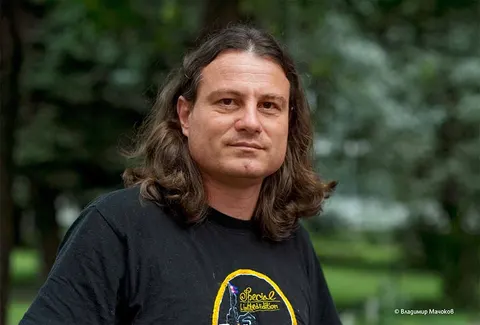
Prof. Preslav Nakov is a specialist in natural language processing, ranked among the top scientists in the field worldwide. Which are the hottest directions to watch for news in artificial intelligence, and in text processing in particular? Where does enthusiasm outrun reality? Are we close to a general AI that can resemble and even surpass humans, is it possible at all, and should it frighten us or, on the contrary, fill us with enthusiasm for the future?
 357
Takor Kyurdyan: The Artist of Archetypes
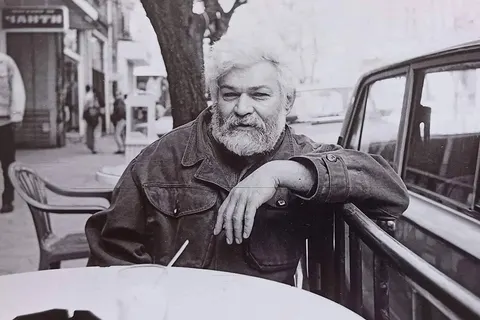
A remarkable master spends years searching for his own way to leave his gaze on photographic paper, and in the end he finds it: he coats his nude heroines in emulsion and “prints” them directly onto the paper. His unconventional approach and his photographic paintings, which become known as “archetypes,” own their era, and then seem to vanish, just as archetypes do. Today you will find almost nothing about him on the endless internet. Takor Kyurdyan died a quarter of a century ago, at only 51, and now his singular works are being reborn, dug out of time's memory by a young historian. It is time for a black-and-white digital story that brings together the fates of three men in a friendship beyond time.
 358
“In the World of AI, Everyone Can Find Something Exciting”
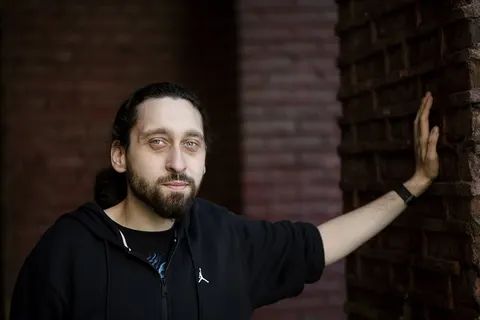
Yordan Darakchiev leads the only program in Bulgaria where, in just a year, you can gain enough knowledge to start working in artificial intelligence. How did Yordan, an astrophysicist by profession, come to create a venture that has now given so many people the fundamentals five times over, and how do its graduates go on to research institutes, to companies like Tesla and Meta, to promising startups, and even to ventures of their own? What does it take to succeed in machine learning, how does this kind of technology help us understand the world we live in, and which directions in artificial intelligence are the most exciting ones to watch?
 359
“Today, Even Reasonable Arguments Fail to Persuade”
Svetoslav Ivanov is a landmark journalist, reporter and host because he looks not only for what is topical but for what is meaningful and deep, for stories that can move people and show that making television can still be an art. What would he ask a perfect artificial intelligence, what are the greatest dangers such technologies pose to society, and why do people who think differently so often end up in an “online prison” today? And will we ever manage to create an algorithm that tells moving stories like Ivo Ivanov?
 360
“Sometimes I’ll Come…”: How AI Illustrated 10 Classic Bulgarian Verses
What illustrations could artificial intelligence draw from the works of Botev, Debelyanov, Boris Hristov and Georgi Gospodinov, and how would image-generating algorithms interpret classic lines of Bulgarian literature? This kind of AI has been a hit in recent months, a striking example of what technology can already do, and it has given rise to a new skill: describing an image so precisely that the algorithm generates exactly what you expect. So what happens when we “feed” it the stanzas of proven masters? Here are the fascinating results!